
Home / Extra Strong / Iceberg Gummy Bear Nicotine Pouches
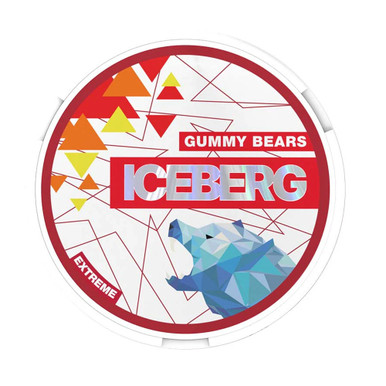
Iceberg · 50mg
Read the full guide
Iceberg Gummy Bear Nicotine Pouches
£39.90
✔ In stock — ready to ship
100% tobacco-free
Free over £20
Same-day dispatch
Secure checkout
This page covers Iceberg Gummy Bear Nicotine Pouches. The record we hold against it is shorter than most on this site, and it is more useful to set out what is missing alongside what is present than to lead with the good bits and let the gaps emerge later.
What we hold: a price of £39.90, a single declared strength of 50mg, a flavour field containing the single word sweet, one product image, and a stock flag reading out of stock at the time of writing.
The full guide to Iceberg Gummy Bear Nicotine Pouches
5,293 words on how it eats, who it suits, how to serve it and what to put beside it.
The listing, and the parts of it we cannot fill in
What we do not hold: the pack arrangement. The field that tells us whether £39.90 buys one can or a box of them is empty on this listing. That is unusual and it matters, because on this site the difference between a three-pound listing and a forty-pound one is almost always how many cans are in the box. We are not going to guess. Nor do we hold a pouch count per can, or a format designation — slim, regular or otherwise. All three of those are answered by the packaging and by the checkout page rather than by this description.
A page that only listed the facts it liked would be easier to write and worth less. If the missing pack arrangement is the thing you need before ordering, that is a reasonable place to stop reading and check the listing itself.
Before going on: this is an age-restricted nicotine product for adults aged 18 or over who already use nicotine. The compliance section near the foot of the page is part of the listing rather than an appendix to it.
Physically, the object is the usual press-lid tin — a shallow plastic cylinder, wider than it is deep, with the brand and the flavour word on the lid. Whatever the pack arrangement turns out to be, an individual can is that.
A confectionery name and a one-word tag
The product is called Gummy Bear. Our flavour record says sweet. Those are not the same claim and the difference is worth naming.
The flavour tag is the thing our shelves are built from, which means this listing appears in the sweet grouping rather than under any fruit heading. That is accurate as far as it goes — a confectionery flavour is a sweet flavour — but it is also the broadest possible description, and it tells you nothing about which of the many possible readings of the name Iceberg has actually produced. Confectionery of that kind comes in a dozen flavours in a single bag, so "gummy bear" as a flavour word could reasonably mean a mixed-fruit blend, a single dominant fruit, or a generic sweet character with no particular fruit in it at all. Our record does not distinguish between those. The can does.
The other thing to say plainly, and to say early rather than bury: a confectionery flavour name does not soften what this product is or change who it is for. This is an 18+ nicotine product. It is sold only to adults who already use nicotine, and nothing about the name on the lid makes it anything else. We describe the flavour because somebody choosing between cans needs a flavour description, and we describe it as a taste and leave it at that.
What the flavour is like, as taste and aroma
Confectionery flavour directions occupy a distinct corner of a pouch shelf. They are sweet-led, which is the obvious part, but the more useful distinction is that they are sweet in a particular way — the sweetness is the subject rather than the setting. In a fruit flavour, sweetness supports a recognisable fruit. In a confectionery flavour, the confection is the reference point and any fruit in it is stylised rather than realistic.
On the other axes, this family runs low. There is very little genuine acidity, unless a maker names a sour variant, and essentially no bitterness at all. Cooling is optional and generally absent unless the product name says otherwise; this one does not say otherwise, though our record carries no cooling designation either way, so the can is where that is settled. The result is a flavour with very few edges to it — broad, rounded and uncomplicated.
Everything in this section is a description of taste and aroma. No claim of any other kind is being made and none should be inferred.
Aroma on opening tends to be pronounced and unmistakably confected. It carries further than a herbal or roasted can does and lingers in a small room. As with most sweet-led directions, the smell runs ahead of the taste — the nose promises a little more than the mouth delivers, which registers on the first pouch from a can and then stops being noticeable.
Over the course of a pouch the flavour narrows. With a confectionery direction the stylised fruit character generally goes before the plain sweetness does, so the later part tends to read as simply sweet rather than as anything specific. That is the normal behaviour of the format rather than a fault in this can. We hold no timing data and are not going to invent any; how long a pouch stays interesting is an individual matter.
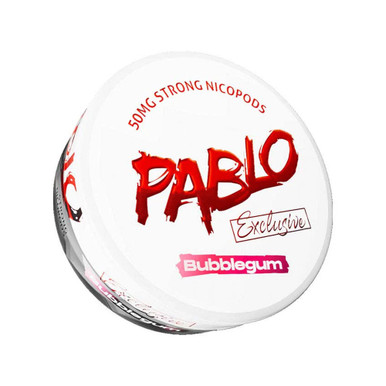
For a nearby reference point, Killa Bubblegum at £33.50 and Pablo Exclusive Bubblegum at £3.85 both name a different confection but occupy the same corner of the shelf, and comparing them is a fair way to see how differently two makers read a sweet-shop brief.
Keeping a can in good order
Storage is the part of owning pouches that people work out by getting it wrong once. It is not complicated, but the failure modes are unobvious until they have happened, so it is worth setting out properly rather than in a single line at the bottom of a page.
Dry pouches and moist pouches behave differently
Pouches are built along a spectrum from dry to moist, and where a product sits on that spectrum changes what storage has to protect against. A dry pouch has little moisture to lose and degrades mainly through flavour fading and the contents becoming dusty and loose in the tin. A moist pouch has moisture to lose and degrades faster once the seal is broken, becoming harder and less pleasant well before the flavour has finished going.
We do not hold a designation for this listing, so we cannot tell you which of the two this is. That is a genuine gap rather than an evasion. The practical consequence is that the safe approach is the one that suits the more fragile case: treat the can as though moisture matters, keep the lid properly seated, and do not leave it open on a desk for an afternoon. Doing that costs nothing if the pouches turn out to be dry.
Heat is the fast problem
Of everything that can happen to a can, heat does the most damage in the least time. A car left in sun on a summer afternoon is the classic case — the interior reaches temperatures that a cupboard never will, and a can left on a dashboard or in a door pocket can change noticeably in a single day. Radiator shelves, windowsills, the top of a warm appliance and a coat pocket left over a heater all do the same thing more slowly.
The instruction is short: cool, dark, dry. That is the whole of it. A drawer is ideal, a cupboard is fine, a bathroom shelf is less good because of the humidity swings, and anywhere in direct sun is the worst option available.
The fridge question, which comes up constantly
People ask whether cans should be refrigerated, and the answer is that they should not need to be. A fridge is unnecessary for a sealed can stored somewhere cool, and it introduces a problem that ordinary storage does not have: condensation. A cold can opened in a warm room collects water on its inner surfaces, and water arriving from outside is not doing the contents any favours regardless of where on the dry-to-moist spectrum they sit. If a can has been refrigerated for some reason, letting it come up to room temperature before opening it is the sensible order of operations.
The lid, and why the catch compartment matters more than it looks
The single most effective storage habit is also the least glamorous: seat the lid properly every time. A lid that is pressed home makes a reasonable seal. A lid resting on top does not, and the difference over a week is easily noticeable.
The reason lids stop seating is almost always the catch compartment in the top, which is where used pouches go. It holds three or four. Once it is full the lid sits proud, the seal is gone, the can rattles in a pocket and the contents start drying out faster than they should. Emptying that compartment regularly is therefore a storage measure and not merely a matter of tidiness. Used pouches go into general waste — a bin, not a sink, not a drain, not out of a car window.
Carrying a can about
A can in a bag or a pocket gets warmer, gets knocked and gets opened more often than one in a drawer, so a carried can ages faster than a stored one. That is not an argument against carrying one; it is an argument for carrying one rather than several, and leaving the rest somewhere cool and closed. If the listing does turn out to be a multi-can pack, the sensible arrangement is the box left intact in a cupboard with a single can in circulation.
Order of use, when there is more than one can about
Anybody who ends up with several cans in the house at once faces a small question of sequencing, and the answer is the same one a shopkeeper would give about anything on a shelf: open the oldest first. Cans do not carry a visible age once they are out of a box, so whatever system stops them getting jumbled is worth having — a particular drawer for the unopened ones, or simply the habit of putting new arrivals at the back rather than the front.
The failure mode this avoids is the one where a can sits behind something else for three months, gets opened last, and disappoints for reasons that have nothing to do with the maker. It is a dull piece of housekeeping and it is the difference between a can that tastes the way it was built to and one that does not.
Seasonal and travel edge cases
Two situations are worth flagging because they catch people out. The first is a warm holiday: a can in a suitcase in a hold is fine, a can in a beach bag in direct sun for six hours is not, and the difference is entirely about temperature. The second is a cold snap, which is far less of a problem — cold does not damage a can the way heat does — except for the condensation issue described above when it comes back indoors.
Neither situation needs special equipment. A cool, shaded, closed container is the whole of the requirement, and a hotel drawer does that job as well as anything sold for the purpose.
Recognising a can that is past its best
The signs are unremarkable. The flavour arrives weaker and fades sooner. The pouches feel drier and looser in the tin and the tin gives off less aroma when opened. Nothing dramatic happens; a neglected can simply becomes a less interesting version of itself. There is no trick for reviving one, and adding moisture of any kind to a can is a bad idea rather than a clever one.
Finally, the storage point that is not about the product's condition at all: a can belongs out of the reach of children and away from anybody it is not intended for. That is a condition of having it in the house rather than a tip.
Standing this next to the rest of the 50mg shelf
This listing declares one strength and one only: 50mg. That puts it squarely in the band we group as extra strong, and it makes the shelf comparison unusually clean, because there is no low variant to complicate the picture.
The Extra Strong shelf runs to ninety-eight listings, which makes it one of the two or three largest groupings on the site. That size is the first thing worth understanding about it. A shelf of ninety-eight listings is not a niche corner of the catalogue; it is a substantial cross-section of it, gathering cans from many different makers whose only common property is the region their declared figures fall into.
It follows that the shelf is diverse in every respect except that one. Prices on it range from a few pounds to forty. Flavours run from confectionery through fruit and mint to coffee and herbal. Formats vary. Pack arrangements vary. The single thing two listings on that shelf are guaranteed to share is the band their label figures sit in, which is a narrower thing to have in common than the shelf name suggests.
What a shared band does and does not mean
It is worth being precise, because the shelf names invite a misreading. Grouping by declared figure is a filing decision. It sorts listings by a number the manufacturer prints, and nothing more. It does not rank them, it does not say anything about what any of them will seem like to a particular person, and it is not a recommendation that anybody shop within one band rather than another. Two listings on the same shelf can be entirely unalike.
Nor is a higher band a better one. That deserves saying without hedging, because a shop laying its shelves out in ascending order invites exactly that inference and we would rather cut it off. A larger declared figure is a larger number on a label. It is not an upgrade, it is not a sign of quality, and which figure suits a person is not something a retailer can know or should guess at.
A rough map of the band
It helps to see the spread laid out rather than described. The table below takes a handful of listings that sit near this one and shows how little they have in common beyond the shelf they share. Prices and flavours are as our record holds them.
| Listing | Price as listed | Flavour direction | What it shares with this can |
|---|---|---|---|
| Iceberg Gummy Bear | £39.90 | Confectionery, sweet-led | — |
| Killa Bubblegum | £33.50 | Confectionery, sweet-led | Flavour corner and band |
| Pablo Exclusive Bubblegum | £3.85 | Confectionery, sweet-led | Flavour corner only; very different price |
| Cuba Black Apple Juice | £39.90 | Orchard fruit, acidity forward | Price and band; nothing else |
| Iceberg Sour Berries | £39.90 | Berry, with sourness added | Maker, price and band |
| Siberia Mini | £39.50 | Separate house style, small format | Band and roughly the price |
Read across any row and the pattern is the same: a shelf is a filing system, not a family. Two listings sitting beside each other in a strength band may have been built by different makers to completely different briefs, and the number that put them on the same page is the only thing they were ever guaranteed to share.
Same shelf, different prices
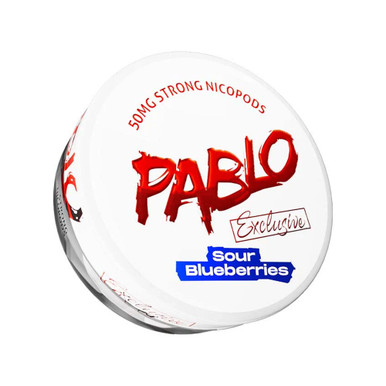
The price spread within the band is the thing that trips people up most. Sitting near this listing at the same £39.90 are Cuba Black Apple Juice and Iceberg Sour Berries, while Pablo Exclusive Sour Blueberries shows at £3.85, Pouch Nurdz Cool Mint at £19.99 and Siberia Mini at £39.50. Those numbers are not comparable until you know what each one buys, and on a shelf view they sit in the same column looking as though they are. Two of that set — the Iceberg berry can and the Pouch Nurdz listing — are also currently marked out of stock, so the shelf as displayed is not the shelf as available.
The neighbouring bands work the same way. The Strong grouping and the Medium Strength grouping collect listings whose declared figures fall lower, and a listing appears on exactly one band rather than on several, so the shelves never show the same product twice.
Same shelf, very different flavours
The other thing a shared band conceals is how far apart the flavours on it sit. This listing is a confectionery direction. On the same shelf you will find Maggie Original Jamaican Cherry Tonic Wine at £39.90, which belongs to no conventional flavour family at all, and Iceberg Cherry Apricot Gum at the same price, which pairs two stone fruits under a confectionery qualifier. Neither has much to do with the other or with this one beyond the number on the label. Shopping a strength shelf for flavour is therefore a slow way to work; it is much quicker to start from a flavour grouping and check the declared figures afterwards.
The pouch in use
A nicotine pouch is a small sealed pouch that goes in the mouth and is left there. It is not chewed and it is not swallowed, whatever the flavour name suggests, and it is not a confection. That applies across the site.
It sits at the front of the mouth, between the lip and the jaw, held by the lip alone. Most people move it about, particularly early on. If it is uncomfortable wherever it goes, taking it out is the right response rather than something to be persevered through.
Duration is too variable to average honestly — reported times run from a few minutes to most of an hour, and the reason usually given for removing one is that the taste has gone. We publish no figure, suggest none, and defer to whatever usage guidance the manufacturer prints on the can.
Two mechanical details that come up. The pouches sit flat in a ring around the base of the tin, so the first one out is awkward and the rest are not, and tipping an open can over scatters the lot. And nothing sticks to anything, so no technique is needed to separate them.
On visibility: a pouch reads as a slight fullness under the lip to anyone looking, and alters the shape of a consonant or two for the first minute. That is a description of an object in a mouth and we draw nothing further from it. Where it is and is not acceptable to have one in place is a matter for venues, employers and transport operators to state in their own rules, and none of that is ours to interpret on a product page.
One last mechanical point about the tin itself, which is easy to overlook until it becomes annoying. The press-fit lid is designed to be prised at the edge rather than levered from the centre, and repeatedly opening it by pushing a thumb into the middle of the lid is what eventually leaves a can that will not close properly. A lid that has been distorted is the second commonest reason for a can losing its seal, after a full catch compartment, and unlike the compartment it cannot be fixed by emptying anything.
One figure, one price
There is a single declared strength on this listing — 50mg — at £39.90. The milligram number is the nicotine content Iceberg declares for one pouch. We reproduce it exactly as given, do not verify it ourselves, and would treat the printed can as correct over this page in the event of any disagreement.
Because there is only one figure, this listing offers no internal comparison at all. There is no lower variant to weigh against it and no decision to make on that axis. Where a product does list several declarations, the relationship between them is arithmetic and nothing else, and we do not use it to steer anybody one way or the other. Here the question does not arise.
Iceberg on our shelves, with a gap acknowledged
The Iceberg shelf holds forty listings, which makes it one of the broader brand ranges we carry, and this can is one entry on it.
The siblings our record names are all priced at £39.90, the same as this can, which suggests a flat house price rather than flavour-by-flavour pricing. Iceberg Berries and Iceberg Black Currant sit in the berry family, Iceberg Apple Lemon Pineapple is a three-fruit construction with acidity at the front of it, Iceberg Black Mint belongs to the mint family, and Iceberg Arasaka and Iceberg Black carry names that say nothing at all about flavour — a habit of this brand's that is worth knowing about before ordering one unseen.
A caveat that applies to all of them: every one of those six is flagged out of stock on our record at the time of writing, as is this listing. That is a range-wide position rather than a comment on any single can, and it means the brand shelf is likely to be thinner in practice than its forty entries suggest. Those forty listings remain reachable from the brand shelf, which is the honest route from here to the rest of what Iceberg does.
What people keep alongside a confectionery can
Most regular customers keep two or three flavours going rather than one, on the straightforward basis that a single flavour met constantly stops registering. The useful principle is that a second can should be different rather than adjacent — two confectionery cans in rotation is two versions of the same thing.
The sweet grouping collects twelve listings and is where the adjacent options live, which makes it the shelf to read if you want more of the same and the shelf to avoid if you want contrast. For contrast, the fruit listings are the obvious move: the sour berry can from the same maker at £39.90 brings a darker berry reading with sourness added to it, and the Pablo sour blueberry can at £3.85 goes further still by putting acidity right at the front, which is the axis a confectionery flavour has least of. Iceberg Bubble Gum at £39.90 is the opposite move — an adjacent can rather than a contrasting one — and is included here mainly as an example of what not to pair with this if variety is the aim.
Brand-level browsing is the other way people find a second can. The Pablo range is priced per can throughout, which makes it a low-cost place to experiment, while the Cuba brand page gathers listings priced the way this one is. Pairing is a habit rather than a rule and none of this is a recommendation about what anybody should keep.
What there is to decide
Less than on most pages here. There is one declared strength, so no choice on that axis. There is one price, £39.90. And the pack arrangement is not recorded, so there is nothing to choose there either — the listing comes however it comes, and the checkout is where that becomes clear.
The one genuine decision is whether a confectionery flavour direction is what you want at all, and that is answered by the flavour rather than by anything on the specification. If it is unfamiliar territory, meeting it in a cheaper single-can listing from another maker first is a reasonable order of operations, and everything we stock can be filtered by shelf to find one.
Ordering, delivery and the doorstep
The stock flag on this listing reads out of stock at the time of writing, so the direct answer to whether it can be ordered today is no. Flags move and this one may read differently when you see it, but leading with it seemed better than letting somebody read two thousand words and find out at the end.
When it is available, £39.90 is the price and delivery is by courier to a UK address, with the timescales shown at checkout being the ones that apply.
Age verification applies to every order. This is sold to adults aged 18 or over only. Age may be checked when the order is placed and photographic identification may be requested by the courier before the parcel is handed over; a delivery that cannot be verified will not complete. It is a minor inconvenience and the alternative is a shop that does not bother, which this one is not.
Getting around from here
Three routes lead off this page. The brand shelf, for anybody who came for Iceberg. The sweet grouping, for anybody who came for the flavour direction. And the strength bands, for anybody sorting by the number on the label.
If none of those is the question, the full index of listings holds everything, though narrowing from a shelf is usually faster than scrolling the whole catalogue. The ninety-eight extra strong listings are the band this particular can belongs to, and that shelf is the one that will show you the nearest neighbours by declared figure.
A practical note on how the shelves interact, since it is not obvious from the navigation. Brand shelves, flavour groupings and strength bands are three independent ways of slicing the same catalogue, and a single listing appears on one of each. That means there is no wrong door — any of the three will eventually reach any listing — but the routes differ in how quickly they narrow. A flavour grouping of twelve listings narrows fast. A strength band of ninety-eight narrows slowly. Starting from whichever of the three you actually care about, rather than from whichever is nearest the top of the page, is the shortest path in almost every case.
Questions we get
How many cans do I get for £39.90?
We do not hold that figure for this listing, and it is the most significant gap on the record. On this site a forty-pound price usually indicates a multi-can pack and a three-pound price a single can, but "usually" is not good enough to publish as fact. The listing page and the checkout are where the pack arrangement is stated, and we would rather point you there than guess.
What does gummy bear actually taste of?
Our flavour record holds one word — sweet — so we cannot tell you which reading of the name Iceberg has produced. Confectionery of that kind is made in many fruit flavours, so the name could cover a mixed blend or a single dominant note. What is safe to say is that it is a sweet-led direction with little acidity and no bitterness. The can states what the manufacturer intends.
Is there a lower strength available?
Not on this listing. A single declared figure of 50mg is all our record holds, so there is no variant to select. Other products on the site list several declarations, and the strength shelves are the quickest way to find listings whose figures fall in a different band.
Is 50mg better than a lower number?
No. A larger declared figure is a larger number printed on a label and nothing beyond that. It is not a mark of quality and not an upgrade, and which figure suits any individual is not something a retailer can know. We publish the declaration because it is on the record, and we do not attach a judgement to it.
Does the can need to go in the fridge?
No, and it is better not to. A sealed can kept somewhere cool, dark and dry is well looked after. Refrigeration adds condensation to the list of things that can go wrong, because a cold can opened in a warm room collects water inside. If one has been refrigerated, let it warm up before opening it.
How long does a can stay good once opened?
We hold no figure and will not estimate one. What happens is gradual rather than sudden: flavour fades, the contents dry out, and the can becomes a weaker version of itself. How quickly depends on how warm it has been and how often it has been open. Keeping the lid firmly seated does more to slow that than anything else.
Why is this filed under sweet rather than under a fruit?
Because the flavour field on our record contains the word sweet and nothing else, and the shelves are built from the recorded tags rather than from product names. It is a consequence of how the data is structured. We mention it so the shelf placement does not look like an error.
Where do used pouches go?
Into the catch compartment in the lid, and from there into a general waste bin. Not a sink, not a drain, not out of a window. The compartment fills after three or four and a full one stops the lid seating properly, which quietly makes the rest of the can worse, so emptying it early is worth the small effort.
When will it be back?
We do not know. The record carries a stock flag, not a restock schedule, so any date we offered would be fabricated. The listing currently shows unavailable; the brand and flavour shelves are the practical places to look for something else in the meantime.
Who makes it and where?
We hold the brand name and nothing further. Country of origin, manufacturing details and company information are not fields in our record, and we do not publish that sort of thing unless we hold it. Packaging is normally where it is declared.
Is this can slim or regular format?
We do not hold a format designation for this listing, so we cannot say. Format affects how a pouch feels in place more than how it tastes, and makers do not always state it in a product name. Every pouch inside a single tin matches every other one, so whatever the format turns out to be, a can holds no surprises after the first pouch. The packaging is where the designation appears if it appears anywhere.
Can I compare this fairly against a three-pound listing?
Not on headline price alone, and that is the single commonest way to misread this site. A low price usually indicates a single can and a high one a multi-can pack, so the two figures are answering different questions. Since we do not hold the pack arrangement for this listing, the comparison cannot be completed from this page at all — the listing page is where the arrangement is stated, and that is the number to compare on.
Will the courier want to see identification?
They may, and it is sensible to expect it. This is an age-restricted product sold to adults aged 18 or over, and checks can occur both at the point of order and at the door. A delivery that cannot be verified will not be completed, so having identification to hand avoids a wasted journey.
Compliance and legal
This product is for adults aged 18 or over who already use nicotine. It is not sold to under-18s and nothing on this page is written for anyone who does not already use nicotine.
Nicotine is an addictive substance.
This product is not a licensed stop-smoking medicine and no medicinal claim is made for it. It is not intended for non-smokers, non-nicotine-users, under-18s, or anyone who is pregnant or breastfeeding. Nothing written here is medical advice, and anybody with a question about their own circumstances should take it to a qualified professional rather than to a shop.
Age may be verified when an order is placed, and photographic identification may be requested on delivery. Orders that cannot be verified will not be completed. Keep out of the reach of children and away from anyone the product is not intended for.
Summing up
Iceberg Gummy Bear is priced at £39.90, carries a single declared figure of 50mg, is tagged simply as sweet, and currently shows as out of stock. The pack arrangement is not on our record and neither is the pouch count, so both of those are questions for the listing page and the packaging. The flavour name describes a taste; the milligram figure describes a label; and where we do not know something, this page has said so rather than filled the space.
More from Iceberg


More extra strong pouches
More sweet pouches
Where this sits
Iceberg Gummy Bear Nicotine Pouches appears in these categories. Browse them, or jump to something close.
You might also like