
Home / Extra Strong / Iceberg Dragon Fire Nicotine Pouches
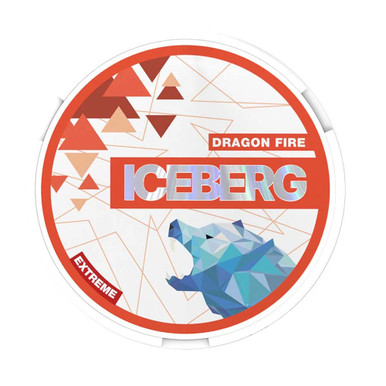
Iceberg · 50mg
Read the full guide
Iceberg Dragon Fire Nicotine Pouches
£39.90
✔ In stock — ready to ship
100% tobacco-free
Free over £20
Same-day dispatch
Secure checkout
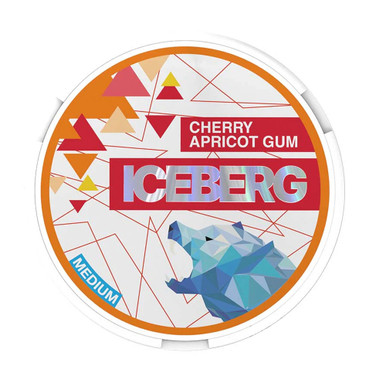
Iceberg Dragon Fire Nicotine Pouches is listed at £39.90 in a single strength of 50mg, with one product image attached. That sentence contains almost everything we hold on this product, and this page is going to be unusually candid about the gaps, because there are several and they are the kind that matter before you spend money.
First, availability. This can is out of stock with us. It cannot be ordered today and there is no back-order arrangement on it. We keep the page published because people search the name, because the strength and price are worth having on record, and because a good deal of what follows is about how to navigate the range and the shelves rather than about this one can. We do not post expected restock dates — we do not reliably know them, and a date offered to seem helpful is worse than an honest blank. Availability changes show on the Iceberg brand shelf before they show in any description.
The full guide to Iceberg Dragon Fire Nicotine Pouches
5,373 words on how it eats, who it suits, how to serve it and what to put beside it.
Iceberg Dragon Fire: what our record actually contains
Second, and more unusual: our record carries no flavour information for this product at all. The flavour field is empty. Not vague, not general — empty. For nearly every other can on this site I can at least tell you which family it belongs to. For this one I cannot, and the section below explains what that does and does not mean.
Third, the pack quantity is not recorded either. The field for cans per pack is blank, so I cannot tell you whether £39.90 buys one can or a box of them. Several Iceberg listings on this site do record a ten-can quantity at exactly this price, which would work out at £3.99 a can, but this entry does not carry the figure and I am not going to assume that it follows the same pattern.
So: a confirmed brand, a confirmed price, a confirmed strength, one image, and three blanks. That is a thinner listing than most, and you should know that before reading any further.
Why there is no flavour description here
The product is called Dragon Fire. It would be very easy to write a paragraph inferring a taste from those two words, and a fair number of product pages elsewhere would do exactly that. I am not going to, and it is worth explaining why, because the reasoning applies to more than this can.
Our flavour field for this listing is empty, which means nobody has recorded what this tastes like in the data this page is built from. It also means the product is not filed on any flavour shelf — you will not find it by browsing a flavour category, only by brand or by strength. That absence is consistent: no tag, no shelf.
The name is not a substitute for that missing information. "Dragon Fire" is a product name in the same way that any other two-word name on a shelf is a product name. It is chosen by the maker for a range, and names of that sort are frequently picked for how they sound and how they sit alongside their siblings rather than as a literal description of the contents. Inferring a taste from the word "fire" would mean telling you the can is hot, or spicy, or in some way fierce — and I have no basis whatsoever for any of those statements. The words in the name describe nothing about temperature, nothing about how the pouch behaves, and nothing about what it does. They are a label on a can.
I want to be equally clear on the other side of it: the absence of data is not evidence that the product is unusual, poorly made, or missing anything itself. A blank field in a shop's catalogue is a shop's blank field. The can will carry the maker's own description of what it is, and that description is the authority here — not this page, and not the name.
If a documented flavour is what you need before you commit, then this listing is not the one to buy blind, and there is no shame in saying so on the product's own page. Our shelves are full of cans whose flavour is recorded plainly, including within this same brand and at this same price. Iceberg Cherry, Iceberg Cool Mint and Iceberg Bubble Gum are all £39.90 and all say in the title what they are aiming at. That contrast is the useful thing here: the same maker names some cans descriptively and others — this one, and Iceberg Arasaka alongside it — with words that describe nothing. It is a naming choice, not a difference in the kind of product.
The format, briefly but properly
Since there is no flavour to discuss, the format deserves the attention that would otherwise have gone elsewhere.
A pouch is a small, soft, sealed rectangle that sits between the upper lip and the gum. It is held in place by the lip and stays where it is put. It is not chewed and nothing is swallowed. Once it has settled — usually within the first half-minute — the intention is that you stop registering it.
Portion size is the variable that most determines whether a can suits someone, and it is the one least often considered at the point of choosing. Formats run from slim and mini portions, which are physically small and sit nearly flat, through to full-size portions with real presence against the lip. Smaller portions suit people who want the thing unobtrusive; larger ones suit people who find small pouches shift about and will not stay seated. Our record for Dragon Fire does not state a portion size or a format designation — that is a fourth blank on this listing — so if fit is your deciding factor, Siberia Mini at £39.50 is an example of a listing that puts its format in the title, and reading a product's own page is more reliable than inferring anything from this one.
On duration: we do not tell people how long to keep a pouch in, how often, or how many to use. Habits vary widely between individuals and it is not a retailer's place to direct any of that. Where the can carries the maker's guidance, that is what to follow. The only general observation worth offering is a property of the format rather than advice: flavour in a dry pouch is most defined early and then thins gradually rather than stopping, so whatever this can tastes like, it will taste most like itself in the first stretch.
On the can and disposal: cans of this type commonly have a lid with a compartment in the top for holding used pouches until a bin is available. Our record does not confirm that this particular can has one, so take it as general context. Disposal is the same regardless — a used pouch goes in a bin, not down a sink, not into a drink container, not out of a window, and never anywhere a child or an animal might reach it.
Where a single can sits inside a forty-entry brand range
This is the section that should carry the most weight on this page, and it needs an honest preface.
The Iceberg shelf holds forty entries, which makes it one of the deeper brand ranges we carry, and our record does list a dozen of this can's relatives by name. What it does not do is describe any of them beyond their titles, so what follows names them accurately and declines to characterise the ones whose names give nothing away. Every single one is priced at £39.90, the same as this can.
Sorting them by how much the name tells you is the most useful way to lay the range out, and it makes the point of this whole page rather neatly.
The ones that say what they are. Iceberg Cherry and Iceberg Berries are single-fruit and mixed-fruit respectively. Iceberg Black Currant is a specific dark berry. Iceberg Apple Lemon Pineapple names three fruits and is the most explicit title in the range. Iceberg Cool Mint and Iceberg Black Mint are the two mints, the second giving less away than the first. Iceberg Bubble Gum and Iceberg Cherry Apricot Gum are the confectionery-named pair, and Iceberg Cola is the drink-flavour entry. If you want to know what you are buying before you open it, those are the cans that tell you.
The ones that do not. Iceberg Crazy Mix implies a blend without saying of what. Iceberg Black and Iceberg Arasaka name no flavour whatsoever. And this can sits squarely in that group — Dragon Fire is in the same category of name as Arasaka, a title that sounds evocative and communicates nothing about taste. For all four of those, the can is the only description that exists, and no amount of reading a product page will substitute for it.
That split is the honest answer to the part of the question that asks who each can suits. Within a range priced identically throughout, the descriptively-named cans suit anyone who wants to know in advance; the others suit people who have already tried them or who do not mind finding out. That is as far as our data lets anyone go, and a page claiming to match individual cans to individual people would be making it up.
One more thing you should know before following any of those twelve links: every one of them is out of stock, exactly as this can is. That is an unusual state for a whole range and I would rather state it here than let you discover it a dozen pages later. It also means the practical value of this section right now is orientation rather than shopping.
Beyond the specific names, it is worth explaining how to read a brand range of this size, because the skill transfers and most people never think about it explicitly.
A forty-entry range is not forty unrelated products. Ranges of that size are almost always built as a handful of flavour directions, each appearing in more than one configuration — different strengths, different pack quantities, occasionally different formats. When you browse a brand shelf you are really looking at a grid rather than a list, and the two axes are what you are choosing between. Once you recognise that, a large shelf stops being intimidating and becomes quite quick to work through: find the flavour direction first, then pick the configuration second.
The practical consequence of depth is resilience, and it is the single best reason to care which brand a can comes from. A range with forty entries gives you somewhere to go when one line is unavailable — which is precisely the situation this page describes. If your preferred can comes from a brand represented on our site by one or two listings, an out-of-stock notice is the end of the road. If it comes from a range this size, it is an inconvenience. That is a real, practical benefit of buying within a deep range, and it is the kind of thing people only appreciate the second or third time something they like goes out of stock.
Depth also means consistency in the things a maker controls across its own range. Cans from one brand tend to share a format, so the physical experience of one is a reasonable guide to another from the same maker even where the flavours differ entirely. That is not true across brands. It is why experienced buyers become brand-loyal in a way that looks irrational from outside: they are not loyal to the company, but to a format they have already confirmed suits them.
There is a further point about depth that cuts the other way and is worth stating, since this page is meant to be even-handed. A large range is also where incomplete listings like this one tend to appear. A brand with three products on a site will usually have all three described properly; a brand with forty will almost inevitably have a few entries where a field did not get filled in during cataloguing. That is not a criticism of the maker and it is not a sign that a particular can is an afterthought — it is simply what happens to data at volume. It does mean that when you are browsing a deep range, the quality of the listing and the quality of the product are two different things, and you should not read a thin description as a verdict on what is in the can.
On where this particular can falls within the range: it is a 50mg entry at £39.90, filed on the Extra Strong shelf with the majority of the brand and with ninety-seven other products in total. It is not filed under any flavour category, for the reason given above. Within the grid of the range it is one cell — one flavour direction in one configuration — and the missing fields mean I cannot place it more precisely than that.
Comparing across brands rather than within one is the other approach, and the two ranges we carry in the greatest depth are worth knowing about for that purpose: the Cuba range and the Pablo range. Browsing a single brand shelf, rather than filtering the whole site by flavour, is generally the faster way to find several viable options at a consistent format and a consistent price point.
Reading the 50mg on the label
The milligram figure is a declaration by the maker of the nicotine content, printed on the can. Dragon Fire is listed at 50mg, and that is the only strength figure attached to this entry — there is no second option on this listing.
The figure is a specification, not a rating. A higher number does not mean a better product, a better-tasting one, or a more desirable one, and a lower number does not mean a lesser one. It is also not dependably comparable between makers: two cans printed with the same figure, in different formats and portion sizes, are commonly found to read quite differently, so knowing what figure suits you from one brand transfers only loosely to another. And it does not predict anyone's individual experience, which depends on a good deal the can cannot know.
We use the figures to sort the site into three shelves — Medium Strength, Strong and Extra Strong — and this listing is filed on the last. Those shelves are our own filing scheme rather than an industry standard, and we do not publish the thresholds dividing them, because the pack does not record them. They are a sorting aid.
What this page will not do is suggest that any particular figure is right for you. That is not a judgement a shop is in a position to make, and it will not be made here or in the questions further down.
How buying actually works over time
The second substantial subject on this page is the rhythm of buying, and this listing is an unusually good illustration of why the rhythm matters — because it is a can you cannot buy today, with a quantity you cannot determine, in a flavour you cannot look up. Every one of those is a scheduling problem as much as a shopping problem.
Start with the quantity blank, because it undermines the most basic planning question. If £39.90 covers ten cans, this is a purchase you make every few weeks and it slots into a bulk pattern. If it covers one, it is a purchase you make far more often and it belongs in a completely different budget line. Our record does not say which, so neither can I. Before committing to this listing, that is the first thing to establish on the product page itself at the point of checkout — not because we are being coy, but because the field is genuinely empty in our data.
You can see how wide that ambiguity runs by looking along the shelf at prices we do hold. Pablo Exclusive Banana Ice is listed at £3.85, which is plainly a single can. Siberia Mini is £39.50 and Cuba Black Apple Juice is £39.90. The gap between four pounds and forty is not a statement about quality or strength; it is almost entirely about how many cans are in the box. Anyone comparing headline prices without first checking quantity will reach conclusions that are exactly backwards.
Now the rhythm itself. Buyers tend to settle into one of two patterns, and each has a real cost attached.
Buying in bulk, infrequently, means fewer deliveries, fewer decisions, and — where a listing is a multi-can pack — a lower effective price per can. The cost is commitment: you have tied yourself to one flavour for as long as that supply lasts. With a documented flavour that you already like, that is a good trade. With an undocumented flavour, it is a gamble scaled up, which is the specific reason I would be cautious about treating this particular listing as a bulk purchase if you have not had it before.
Buying small and often means paying more per can and placing more orders, but nothing is ever committed to and nothing sits unused. People who buy this way generally keep several names moving and browse from the shelves rather than returning to one product page; everything we stock is the natural starting point for that kind of shopping.
The pattern most steady buyers arrive at is a combination: a bulk purchase of one known quantity, plus one small purchase each time of something they have not tried. The known name keeps the supply steady; the small one does the exploring. An undocumented listing like this one belongs firmly in the second slot rather than the first.
Then there is order consolidation, which is the part people work out late. Every separate order carries its own delivery, so three orders placed across three weeks cost more in total than one order of the same items. If you know you are going to want something, adding it to an order you were placing anyway is straightforwardly cheaper than ordering it on its own a fortnight later. This is the main practical argument for keeping a mental list rather than buying reactively, and it is why browsing the Cuba shelf or the Pablo listing while you are already checking out is worth the two minutes.
On keeping a spare: the point of a spare can is that it is not counted. It lives somewhere separate from the main supply — a bag, a drawer at work — so it does not get used in the ordinary run and is still there when the ordinary run is exhausted. The one rule is that a spare should be a can you know, not a can you are curious about, because the moment you need it is the worst possible moment to discover you do not get on with it. That makes an undocumented listing a poor candidate for the spare slot specifically.
And on reorder timing: ordering when you open your last can is too late, because delivery takes days. Ordering when you open the second-to-last is the habit that works. If you will not remember that, order on a fixed day of the month instead and let a small surplus build. None of this is a comment on how much anyone should use — it is arithmetic about delivery times and what is left in the drawer.
It is also worth looking at the wider shelves periodically rather than only reactively. Ranges change — listings appear, prices move, and things that were unavailable return without announcement — so a few minutes on a brand shelf every handful of orders keeps your picture current.
Finally, the rhythm problem this page began with: when something you rely on goes out of stock, the answer is not to wait for it. We cannot tell you when it will return. The workable approach is to have a second acceptable name already identified, so an out-of-stock notice costs you a click rather than a week.
What to keep alongside, and what to buy instead
Because this listing is unavailable and undocumented, the honest framing here is less "what pairs with it" and more "what you might reasonably buy in its place".
The awkward fact is that the twelve Iceberg cans listed above are all unavailable too, so a like-for-like substitution within the brand is not on the table today. That narrows the useful suggestions to the products listed near this one that are actually in stock, and there are four of them.
Cuba Black Apple Juice at £39.90 matches this can's price exactly and states its flavour plainly, which makes it the straightforward substitute if what you want is a documented can at the same spend. Maggie Original Jamaican Cherry Tonic Wine, also £39.90, is the most distinctive thing we list at that price and the one to consider if you were drawn to this listing by an unusual-sounding name in the first place — the difference being that its name does describe something.
If you would rather not commit forty pounds while working out what you like, Pablo Exclusive Banana Ice at £3.85 is much the cheapest entry listed near this one and is the sensible way to test a flavour direction. Siberia Mini at £39.50 is worth a look if it is format rather than flavour you are exploring, since it states its format in the name.
On rotation generally: very few people run one flavour alone for long, because a taste used continuously stops registering while the same taste returned to after a break reads properly again. Two open cans at a time is manageable; four is how cans get forgotten at the back of a drawer. The usual sensible arrangement is one constant name plus one slot that changes, which tests one variable at a time.
Deciding what to buy when the listing is thin
This listing offers one strength, 50mg, at one price, £39.90, with the quantity unrecorded. There is no second variant to weigh up, so the decision is not really between options on this page — it is whether to buy from this page at all.
I would put it plainly. If you have had Iceberg Dragon Fire before and know what it is, then the only things this page adds are the current price, the strength on record and the fact that it is unavailable at the moment. Everything else you already know better than our data does.
If you have not had it before, then buying it means buying a flavour that is not described, in a quantity that is not stated, at a price of £39.90. Some people are happy with that and treat it as a small experiment. Plenty of others would rather not, and that is an entirely reasonable position that we are not going to argue you out of. The shelves have a great many cans whose flavour is recorded, and those are the sensible purchases if certainty matters to you.
Either way, the question is moot until stock returns. There is nothing to add to a basket today.
Storing a can sensibly
Storage is straightforward and comes down to heat, light and the seal.
Heat is what does the damage. A can left on a windowsill in the sun, on a dashboard, or above a radiator will not be in the state it was when it arrived. Flavour tends to be the first thing affected, because the brightest notes in any profile are the least durable. Somewhere cool, dark and ordinary — a cupboard, a drawer — is entirely adequate and nothing more elaborate is required.
Keep the lid properly closed between uses; a can left ajar dries at the edges. Some people keep cans in the fridge, which is neither necessary nor something we advise for or against, but if you do it, keep them sealed and away from strongly scented food, because a loosely closed can will pick up whatever is beside it.
Check the date marking when a can arrives, and check it again on anything that has been sitting at the back of a drawer. If you have bought in quantity, that matters more, since the last can is opened long after the first. And the point that is not negotiable: keep cans out of reach of children and animals, in a high or closed cupboard rather than anywhere accessible.
Ordering, delivery and proving your age
Ordering is the ordinary process: items go into a basket from their own pages and travel together as one delivery, which is why building a single larger order is more sensible than placing several small ones close together.
This can is out of stock, so it cannot be added to a basket at present, and we do not take back-orders.
Delivery is within the UK, in plain outer packaging that does not describe the contents. Timing depends on the service chosen at checkout and the destination; expect a few days rather than next-day, which is the practical reason to reorder before your supply is actually finished.
Age verification applies to every order without exception. This is an 18+ product, age is checked during the ordering process, and the carrier may ask to see photographic ID at the door before handing the parcel over. If no adult is present to show it, the delivery will not be completed. Do not send an order somewhere an adult cannot receive it in person, and do not ask anyone under 18 to take it in on your behalf.
Finding this page, and finding your way onward
There are only two routes to this listing, and that is a direct consequence of the missing flavour tag. By brand, it is one of forty entries on our Iceberg listing. By strength, it is one of ninety-eight on the Extra Strong category. There is no flavour shelf it appears on, so browsing by taste will never surface it.
If you are coming at the site from a different strength, the other two shelves are the Strong listing and the Medium Strength listing. And the full catalogue is there to be browsed as a single list when filtering is getting in the way rather than helping.
Questions we can and cannot answer about this one
What does Dragon Fire taste like?
We do not hold that information. The flavour field for this listing is empty, which is why the product does not appear under any flavour category on the site. I will not infer a taste from the product name, because a name is chosen by a maker for a range and is not a description of contents. The can itself carries the maker's own description, and that is the only reliable source. I would rather give you this answer than a confident invention.
Is it a hot or spicy flavour?
I have no basis for saying so. The words in the product name are part of a name, not a statement about temperature, spice or anything else the can might do. Our record contains no flavour data at all for this listing, so any answer describing how it tastes — fierce, mild or otherwise — would be made up. If a documented flavour matters to you, the cans with their flavour stated plainly are the better purchase.
How many cans do I get for £39.90?
Our record does not say. The quantity field is blank on this listing. Some Iceberg products on our site are recorded as ten-can packs at the same price, which would be £3.99 a can, but this entry does not carry that figure and I will not assume it applies. The product page at checkout will show what a purchase actually includes, and that is the figure to trust.
Can I buy it at the moment?
No. It is marked out of stock in our records, cannot be added to a basket, and there is no back-order option. The page remains up because people search the name and because the price and strength are worth recording. We do not publish expected return dates, as we would be guessing. Checking the Iceberg brand shelf from time to time is the practical approach.
Why is there no flavour category for this product?
Because the flavour field in our data is empty, and the flavour shelves are built from that field. No tag means no shelf. It is a gap in our catalogue rather than a statement about the product, and it has the practical consequence that this listing can only be reached by brand or by strength, never by browsing a flavour.
What strength options are there?
One: 50mg. There is no second variant on this listing. The figure is a declared nicotine content printed on the can — a specification rather than a quality grade — and it is not reliably comparable with the same figure from another maker, since format and portion size differ. Whether a given figure suits any particular person is not something we can or will advise on.
What size is the pouch?
Not recorded. Our data for this listing covers brand, price, strength and one image, and that is all — there is nothing on portion size or format designation, and I will not estimate one. Where fit is the deciding factor, look at listings that state their format in the product name, such as Siberia Mini, and read those products' own pages rather than relying on this one.
Which other Iceberg cans are listed with this one?
Twelve, all at £39.90: Cherry, Berries, Black Currant, Apple Lemon Pineapple, Cool Mint, Black Mint, Bubble Gum, Cherry Apricot Gum, Cola, Crazy Mix, Black and Arasaka. The first nine name a flavour direction; the last three, like this can, do not. All twelve are out of stock at the moment, so the brand shelf with its forty entries and live availability is the page to use if you need something orderable.
Is a 50mg can better than a lower one?
No. The figure is a declaration of nicotine content, not a grade, and there is no sense in which a higher number ranks above a lower one. The strength shelves on this site are a filing system, not a progression or a ladder to climb. Which figure suits a given person depends on things we do not know and should not ask about, so we make no recommendation in either direction.
What should I buy instead while this is unavailable?
The Iceberg cans listed alongside it are all out of stock too, so a substitute within the brand is not possible today. Of the products listed near this one that are in stock, Cuba Black Apple Juice at £39.90 matches the price and states its flavour, and Maggie Original Jamaican Cherry Tonic Wine at the same price is the most distinctive. Pablo Exclusive Banana Ice at £3.85 is the cheapest way to test a direction, and Siberia Mini at £39.50 changes the format instead.
Does the thin listing mean the product is discontinued?
We do not know, and we would not want to imply it. An out-of-stock marker means it is not available from us right now; the empty fields mean our catalogue entry is incomplete. Those are two separate facts about our records, and neither is evidence about the maker's plans. We hold no information on what is or is not being produced.
Will ID be required on delivery?
It may be, and you should expect it. This is an age-restricted product, age is verified when you place the order, and the carrier can ask for photographic ID before releasing the parcel. If there is no adult there to show it, the parcel goes back undelivered. Sending an order to an address where someone of age will actually be present is the way to avoid a wasted delivery.
Age restrictions and the required notices
This product is sold only to adults aged 18 or over who already use nicotine. We will not sell it to anyone under 18, and it is not offered to anyone who does not already use nicotine.
Nicotine is an addictive substance.
It is not a licensed stop-smoking medicine and is neither sold nor presented as one. It is not intended for non-smokers, for people who do not already use nicotine, for under-18s, or for anyone who is pregnant or breastfeeding.
Age is verified when the order is placed, and photographic ID may be requested by the carrier at delivery. Store cans out of reach of children and animals.
Closing note
Iceberg Dragon Fire is listed at £39.90 and 50mg, with no recorded flavour, no recorded pack quantity, no flavour shelf, and no current stock. This page has told you what we hold and has declined to fill the gaps with guesswork. When you want something we can actually describe, the Iceberg range and the complete product list are the places to look.
More from Iceberg

More extra strong pouches

More iceberg pouches

Where this sits
Iceberg Dragon Fire Nicotine Pouches appears in these categories. Browse them, or jump to something close.
You might also like