Home / Medium Strength / UBBS Zest Ice Nicotine Pouches
UBBS · 11mg · 5-can pack
Read the full guide
UBBS Zest Ice Nicotine Pouches
£19.95
✔ In stock — ready to ship
100% tobacco-free
Free over £20
Same-day dispatch
Secure checkout
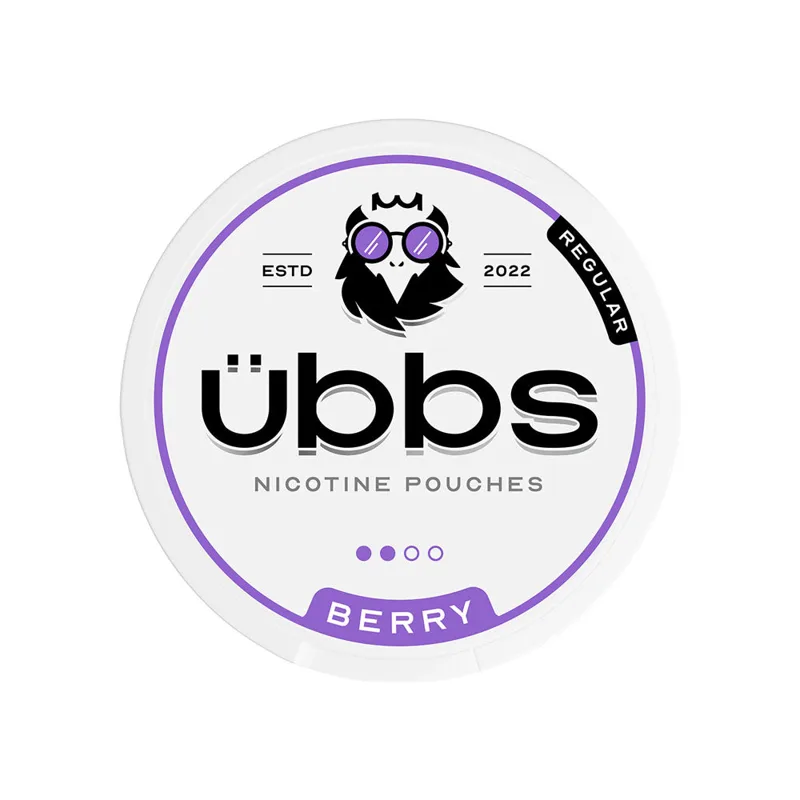
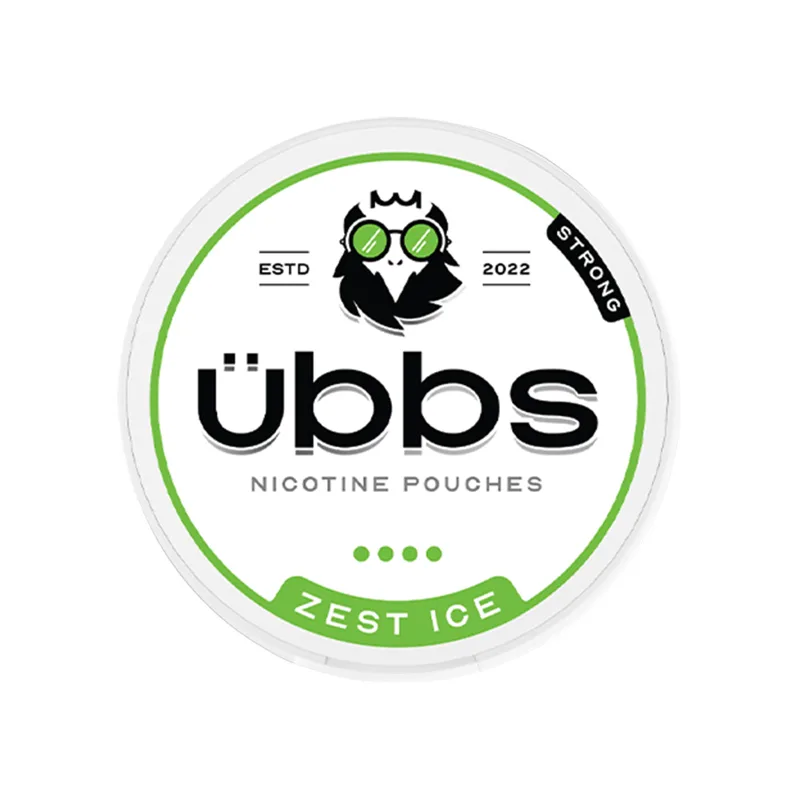
This page covers UBBS Zest Ice Nicotine Pouches. We sell it as a five-can pack at £19.95, with one declared strength against it — 11mg — and therefore no variant to pick before it goes in a basket. Our record shows it in stock at the time of writing and attaches one image to it. The flavour tag we hold against the product is a single word: mint.
That short list is genuinely all our product data amounts to. There is no ingredient breakdown behind it, no manufacturing detail, no pouch count, no weight. A page of this length assembled on top of seven facts has an obligation to be clear about where the facts end, so: what follows is a description of the object, an account of the flavour as taste and aroma, a comparison with the other cans sharing its shelves, and some practical material about keeping a can in usable condition. Where a fair question needs information we do not hold, we say we do not hold it rather than inventing something plausible.
The full guide to UBBS Zest Ice Nicotine Pouches
5,298 words on how it eats, who it suits, how to serve it and what to put beside it.
UBBS Zest Ice: the listing, stated plainly
The tag deserves a flag straight away, because it does not match the name, and that mismatch is discussed properly in the next section rather than buried. In brief: the product is called Zest Ice, and the only flavour tag in our system against it is mint. There is no citrus tag on this listing. We are not going to smooth that over.
Everything here is written for adults aged 18 or over who already use nicotine. The full age, addictiveness and legal wording sits in its own section near the foot of the page.
Reading the name: what "Zest" and "Ice" are doing
Both words in this flavour name are conventions rather than descriptions of events, and taking them apart is the most useful thing this section can do.
Zest, in ordinary tasting vocabulary, refers to the outer coloured layer of a citrus peel and the aromatic oils held in it. It is not the same thing as citrus juice. Juice is sour and watery and tastes of acid; zest is aromatic, faintly bitter, perfumed and considerably more intense, and a small quantity of it carries further than a large quantity of juice. When a flavour is described as zesty it is pointing at that peel character — bright, a little bitter at the edges, more perfume than sourness. Lemon zest and orange zest differ from each other, and grapefruit zest differs again, but all three share that aromatic, slightly bitter quality that separates peel from juice.
Ice is a naming convention used right across this category. It signals the cool mint-family direction of a flavour, and it appears on cans from a great many brands to mean broadly that. It is not a claim about temperature, it is not a description of anything the pouch does to anyone, and it does not carry a defined meaning agreed between brands. It is a word on a lid indicating that a cool note is part of the flavour idea.
Put together, the name points at citrus peel over a cool mint base, which is a well-established pairing. Citrus and mint work together for the same reason citrus and mint work in cooking: the peel's aromatic bitterness and the mint's green coolness sit in different parts of the palate, so neither has to give way to the other. In a dry format that separation matters, because two flavours competing for the same space tend to collapse into one muddled note.
And now the honest part. Everything in the preceding three paragraphs is a reading of the product name and a description of what those words mean in general tasting language. It is not backed by our product data, because our product data on this listing consists of one tag that says mint. There is no citrus tag, no lemon tag, no lime tag. We cannot tell you which citrus the name is pointing at, whether the citrus element is prominent or a background note, or whether the tag simply reflects the cool base and ignores the rest. Our tags are shelving categories applied so that cans surface when somebody browses a flavour grouping, and they are not a recipe or a complete flavour description. Where a name and a tag disagree, as they do here, the can in your hand is a better authority than either, and we would rather point that out than construct a confident paragraph on top of a gap.
What we can say without stretching anything: the tag puts this listing on our mint shelf, which at one hundred and forty-eight listings is the largest flavour grouping we run. Whatever the citrus element amounts to, our catalogue treats this as a cool can first.
The object: five tins, one lid design, one well
The pack contains five identical tins rather than a single one. Each is the shallow round tin the category has standardised on — flat base, straight sides, a lid that comes free of the rim and presses back down onto it. The lid face carries the UBBS name, the flavour and the declared figure, and the presence of that figure on the top is worth more than it sounds once a drawer holds several cans, because you read tins from above and rarely pick them up to check.
Inside, the pouches sit in a ring around the inner wall, flat and regular. Each is a small pale rectangle with softened corners, dry rather than moist, and light in the hand. Our record does not state a pouch count per tin, and we will not put a number on it; the packaging carries the count, and a figure invented by a shop would only compete with a real one.
The underside of the lid is a shallow recess with a lip — the catch compartment. Used pouches go in there, it holds several before needing emptying, and its whole purpose is to make the tin workable when no bin is within reach. It is not for storing fresh pouches and has no other use.
A five-can pack behaves differently from a single tin in one respect that matters for the rest of this page: four of the five sit unopened for a while. That makes storage a live question rather than a theoretical one, which is why it has a substantial section of its own further down.
11mg, and what a printed figure is for
One figure is declared on this listing: 11mg. That is what the manufacturer prints, we reproduce it unchanged, and it is the reason this can is filed under the Medium Strength band rather than somewhere else. That is the figure's entire job in our catalogue — a label on a lid and a filing key on a shelf.
It is not a score and it is not a rank. An 11mg can is not superior to a 6mg one, more advanced than one, or a thing to progress towards. The bands above this one, Strong and Extra Strong, are names for groups of printed numbers and nothing else; they do not describe a hierarchy of quality and we do not present them as one. We make this point at length on every page because milligram figures invite ranking simply by being numbers, and ranking is the one use they should not be put to here.
We also cannot tell you whether 11mg suits you. That is not a hedge; it is a statement about what a retailer can actually know, which is nothing about the person on the other side of the screen. The number is published, the shelf bands are published, and the choice is entirely yours without a steer from us.
One practical consequence of a single declared figure: there is no variant selector on this listing. The £19.95 pack is the 11mg pack and that is the whole of it. Several UBBS flavours declare only one figure like this; at least one declares two at the same price, where the choice is real. Here it is not.
Sharing a shelf with a hundred and thirty-four other cans
The medium band is the second largest strength grouping we run, and this listing sits inside it with a hundred and thirty-four others. It is worth being precise about what that shared shelf does and does not tell you, because shelf membership is one of the most commonly over-read signals in this catalogue.
What it tells you: the declared figures on those listings fall into the same band. That is a real, checkable property and it is the basis on which the shelf is built.
What it does not tell you: that the figures are identical. A band spans a range of printed numbers, so two cans on the same shelf may carry different figures, and a can one band up may carry a figure closer to this one than another can on the same shelf does. If the exact printed number is what you care about, the shelf is the wrong tool and the individual listing is the right one. We publish the declared figure on every listing precisely so that nobody has to infer it from a shelf name.
What it also does not tell you is anything about flavour, format, pouch size, price or pack contents. The medium band contains cool cans, fruit cans, coffee cans and everything in between, from brands that price and package in completely different ways. Look at the neighbours this listing keeps on that shelf and the spread is obvious. White Fox Double Mint at £34.90 and Klint Arctic Mint at £36.90 are both cool cans from brands that sit at the upper end of our price range. Velo Bright Spearmint at £4.19 and Nordic Spirit Frosty Berry at £4.49 are listed at a fraction of those figures. All four are in stock in our record. The gap between £4.19 and £36.90 is not a gap in quality or in declared strength; it is a gap in what the listing covers, and our record does not state a can count for either of the cheaper two, so the comparison cannot even be completed from our data.
That is the single most useful thing to take from a shelf comparison, and it applies across the whole catalogue: a headline price is only comparable when you know what unit it is attached to. This listing states five cans for £19.95, which is £3.99 a can. Edge Spearmint at £14.95, SYX Cool Mint at £29.90 and XQS Arctic Freeze at £39.90 are three more cool cans on the same shelf at three more prices, and in each case the listing rather than the number is where the answer lives. All three are available in our record at present.
The other thing shelf-mates are genuinely useful for is mapping the flavour territory around a can. On this shelf, close to this listing, you can find the plain cool cans named above; you can find fruit-over-cool arrangements like 77 Apple Mint at £39.90 and Pablo Silver Edition Blueberry Peach Ice at £39.90; and you can find something quite different in Fumi Dark Spice at £27.90, which goes at a spice-forward idea rather than a cool or a fruit one. All are marked in stock. If the citrus-over-cool idea on this can is one you want to triangulate, those are the three directions it sits between: plain cool, fruit over cool, and something else entirely.
Storage, condition, and why dry pouches are the easy ones
The pouches in this tin are dry. That single property determines almost everything about how a can should be looked after, and it is worth explaining because the category contains both dry and moist products and they do not behave the same way.
A moist pouch carries liquid, and anything carrying liquid has a condition that can change: it can dry out if it is left open, it can be affected more noticeably by warmth, and the manufacturers of such products often print storage guidance on the packaging that is worth following closely. A dry pouch has far less to lose. It is not going to dry out, because it started dry. It is not going to leak. It will not change texture dramatically on a warm afternoon. What it can lose is flavour character, and that is the thing worth protecting.
So the whole of dry-pouch storage comes down to four things: cool, dry, out of direct sunlight, lid closed. A kitchen drawer does it. A bedside drawer does it. A cupboard away from the oven does it. Nothing specialised is required and nothing specialised helps.
Heat is the realistic threat and the usual locations are entirely predictable. A car dashboard in summer is the worst of them, because a parked car in sun gets far hotter than people estimate and stays hot for hours. A windowsill that catches the afternoon is second. A bag left in a boot, a coat left over a radiator, a tin left on top of a fridge — all the same problem in smaller doses. Nothing dramatic happens to a tin that gets warm; the issue is cumulative. A can that has been warmed and cooled repeatedly over a fortnight is unlikely to taste like the first can out of the pack, and a flavour built on aromatic citrus-peel notes has more to lose in that exchange than a heavy single-note mint does, because aromatic compounds are the first thing to go.
Sunlight is worth separating from heat, because a tin can sit in bright light without getting especially warm and still be worse off for it. The tin itself is opaque, which helps, but the sensible habit is simply to keep cans somewhere dark rather than somewhere decorative.
The lid is the other half of the job and the easier half. A tin left open is a tin giving off aroma continuously, and aroma leaving the tin is character that never reaches a pouch. These lids press back onto the rim properly, so there is no reason to leave one off between pouches. Use the catch well for used pouches only, and do not decant fresh pouches into a tin from a different product, a pill box or a pocket — the tin is the only thing carrying the flavour name and the declared figure, and an unlabelled pouch loose in a bag is one that nobody, including you, can identify with confidence.
Two things we do not publish, and will not: a shelf life and a storage temperature range. We hold neither. Whatever the packaging states on those points is the authority, and where the packaging is silent, so are we. If a tin has been open for a long time and the flavour has faded, that is a judgement to make by tasting rather than by consulting a date we have made up.
One storage point specific to a five-can pack. Because four tins sit unopened while one is in use, the pack benefits from a fixed home — somewhere consistently cool and dark, chosen once and then forgotten about — with a single tin detached from it and doing the travelling. That arrangement keeps the majority of the purchase out of the conditions that actually degrade it, and it limits the damage if the travelling tin ends up on a dashboard.
A pouch, from lid-off to bin
The pouch sits under the upper lip. A fresh one reads as slightly bulkier than it appeared in the tin for the first minute or so, then settles into the shape of the space and becomes largely unremarkable. Talking with one in place is straightforward. Drinking with one in place is common. Whether to eat with one in is a personal preference that people split on, and it is not our business to turn a preference into advice.
Duration has no honest single answer. Ten minutes and forty-five minutes are both entirely normal, the same person varies across a day, and the variation between people is wider than the variation between cans. Most people use the flavour rather than a clock: the opening is the most pronounced part, the middle stretch is steady and quieter, and the tail thins out until what is left is more of a background than a taste. There is no schedule printed anywhere for this and we are not going to manufacture one.
Removal is a fingertip job and the pouch comes out intact. Into the lid well while you are out; into general waste when the well fills. Not into a sink, a drain, a plant pot or a gutter. Used pouches are small, pale and easy to lose sight of, which is why a closed lid is the right default in any household with children or animals in it, and why emptying the well into a real bin is a habit worth having rather than an optional tidy-up.
One small observation about the first tin of a new pack, since this listing only comes as a pack. The first tin opened is the one that gives the clearest reading of a flavour, because it has spent the least time in whatever conditions the pack has been kept in and it is the one you approach without expectations. If you are trying this flavour for the first time, the first tin is the one to judge it on, and it is worth opening it somewhere you will actually notice the aroma rather than in the middle of something else. By the fourth tin most people have stopped noticing the flavour consciously at all, which is not a fault of the can — it is simply what familiarity does to any repeated taste.
Why cool flavours dominate a dry format
Anyone scrolling our flavour shelves notices the same thing: mint-family cans outnumber everything else by a distance, and one hundred and forty-eight listings on a single flavour shelf is not an accident of buying. There is a structural reason for it, and it explains a fair amount about why this can is built the way it is.
A dry pouch gives a flavour very little to work with. There is no liquid carrying it, nothing being chewed, no volume to hide a weak note behind. Flavour has to come off a small dry parcel steadily across a long stretch, which means it arrives in an arc — a pronounced opening, a quieter and longer middle, a thin tail — rather than as one level impression. Any flavour idea that cannot survive that middle stretch effectively disappears halfway through.
Mint-family notes survive it better than almost anything else. They remain legible at low intensity in a way that delicate flavours do not: a faint mint still reads clearly as mint, whereas a faint pear or a faint floral note reads as almost nothing. That single property is why the cool direction dominates the category and why so many fruit cans are built over a cool base rather than on their own. The base is doing structural work, holding the flavour together through the quiet middle while the fruit or the citrus supplies the character at the front.
Read that way, a name like this one describes an arrangement rather than a blend of equals. A citrus element supplies the distinctive aromatic character; a cool base gives it something to sit on and keeps the can legible when the aromatic part has thinned out. Whether this particular can is arranged that way we cannot confirm from our data, for the reasons already given. But it is the standard architecture in this category, and knowing it makes the naming across our shelves a good deal easier to read.
Running a second can alongside this one
Almost nobody keeps a single flavour going indefinitely, and a five-can pack accelerates that, because five tins of one thing gets repetitive faster than one tin does. The usual pattern people settle into is two cans in rotation, occasionally three, chosen so that they do not overlap.
If this can is your cool one, the second is usually a fruit can — something sweet and obviously different, so that switching between them registers as a change rather than a slight variation. The fruit-over-cool listings mentioned in the shelf section above are the obvious hunting ground, and the UBBS range itself carries two straightforward fruit options and one cola option at the same price and pack size, which keeps the arithmetic simple.
If you would rather have two cool cans and vary the type of cool, that works too and is more common than people assume. Spearmint, peppermint, menthol and the colder arctic-style flavours are genuinely different ideas rather than shades of one, and alternating between two of them is a real change of taste. A citrus-over-cool can rotates well against a plain cool can for exactly that reason: the aromatic element is the variable, and the base stays familiar.
The third position, where people have one, tends to go to something that fits neither camp — a coffee can, a cola can, a spice-forward can. It is rarely the one anybody gets through quickest, and it is usually the one that stops a rotation going stale. There is no correct number of cans to keep going, and we are not suggesting anyone keep more than they would otherwise; this is a description of what people do, not a recommendation about what to buy.
Where this can sits inside the UBBS range
The UBBS collection runs to twelve listings, all priced at £19.95 and all sold as five-can packs. That consistency makes the brand unusually easy to move around in: since price and pack size never vary, the only things that change between listings are the flavour and the declared figure.
This can is the brand's citrus-leaning cool option, at least by name. The brand's other cool cans take different routes. UBBS Peppermint at £19.95 is the rounder, sweeter, more confectionery-adjacent mint, while UBBS Menthol at £19.95 is the sharper and more single-minded of the two, with very little sweetness to it. Against those, a citrus-over-cool idea is the one with an aromatic element the other two do not have. All three are in stock in our record.
On the fruit side of the brand, UBBS Cherry at £19.95 is dark stone fruit, UBBS Peach Passion at £19.95 is the soft, sweet, tropical-leaning option, and UBBS Cola Ice at £19.95 is a sweet cola idea carrying the same "Ice" convention this can does — which makes it the closest structural relation in the range even though the flavours share nothing. The genuine outlier is UBBS Coffee at £19.95, a bitter roasted flavour with no counterpart anywhere else in the line-up. Every one of those listings is marked available as this is written.
Deciding what to order
The choices on this listing are few and easy to describe. There is no strength decision, because one figure is declared. There is no pack-size decision, because five cans is how it is sold and we do not list a single tin of it. What remains is whether a five-can pack is the right way to buy a flavour you may not have had, and that is a genuine question rather than a rhetorical one.
A pack is the tidy way to buy a flavour you already know. It is a larger commitment to one you do not, and a name that does not match its tag is exactly the situation where you have less certainty than usual about what will arrive. If that bothers you, the sensible route is a smaller unit of a cool can from another brand first — several are named in the shelf section above and are sold in different quantities — and the pack afterwards if the idea earns it.
On strength suitability we have nothing to offer and will not pretend otherwise. The figure is published, and the decision is not one a shop can make for a person.
Ordering, delivery and age verification
Buying is straightforward. The £19.95 pack goes into the basket without a variant to choose, and the stock state displayed on the listing is live — trust it over anything written here, since this page was written before you read it and stock moves.
Age checks apply and are not a formality. Verification happens at the point of order, and identification may be requested on delivery. A parcel will not be handed to anyone who cannot show they are 18 or over. If somebody else in the household is likely to take the delivery, that is worth knowing before the doorbell goes rather than after.
Carriers, delivery windows and returns are covered on the site's own delivery pages, which carry the current position. We do not restate those on product pages because they change and a frozen copy here would go stale. The same applies to stock notes: everything said about availability on this page describes our record at the time of writing.
Getting around the catalogue from here
Three shelves carry this listing. The strength band collects listings by declared figure. The brand shelf gathers the twelve UBBS cans at their single shared price. The mint shelf is the largest flavour grouping on the site and is where this can is filed, tag mismatch and all.
If you would rather see the lot, the whole catalogue in one list is there. For brand-led browsing, the Pablo range and the Cuba range are two of the larger collections we carry, and both run at higher declared figures than this listing. For figure-led browsing, the strength bands linked further up do the same job from the other end.
Questions we get, answered as honestly as we can
Does Zest Ice contain citrus?
The name points that way and our tag does not confirm it. We hold one flavour tag against this listing and it says mint. There is no citrus tag on it. We cannot tell you which citrus the name refers to, or how prominent that element is in the blend, because our record simply does not carry the information. The packaging is the better source, and we would rather flag the gap than fill it.
Does "Ice" mean it is cold?
No. "Ice" is a naming convention used across this category to indicate the cool mint-family direction of a flavour. It is a taste description and not a statement about temperature or about anything the product does. Brands do not use it to a shared definition, so it tells you the direction of a flavour rather than its intensity.
Is the £19.95 for one tin?
No, it covers five. Our record lists this as a five-can pack at £19.95, which works out at £3.99 per tin. There is no single-can version of this listing on our shelves. If a single tin is what you want, that means a different listing from a brand that sells them individually.
How many pouches are in each tin?
We do not hold that number and we will not estimate it. It is printed on the packaging, and that is the figure to use. An estimate published beside genuine data tends to get read as data, which is precisely the problem we are trying to avoid on these pages.
Is 11mg strong?
It is a figure the manufacturer prints, and our shelves file it in the medium band. Beyond that we are not going to characterise it, because "strong" in that question means something different to every person asking and we have no way to answer it for an individual. Higher printed numbers exist in our catalogue and lower ones do too; none of them is better than another, and we cannot tell you which suits you.
Why is it on the mint shelf when the name says Zest?
Because our flavour tags are shelving categories rather than flavour breakdowns, and the only tag on this listing is mint. That places it on the mint shelf. It is a filing decision, not an assessment of the blend, and where it disagrees with the product name — as it does here — we point out the disagreement rather than resolving it with a guess.
How does it compare to the other cool cans you stock?
By name, it has an aromatic citrus element the plain mint cans do not. By our data, we cannot substantiate that, because the tag set is identical to a plain mint can's. What we can compare honestly is price, pack contents, brand and declared figure, and the shelf section above does exactly that across several available alternatives at prices from £4.19 to £39.90.
Can I keep a tin in the car?
You can, and many people do, but a car in sun gets considerably hotter than a drawer and stays hot for hours. Repeated warming does not ruin a tin dramatically; it wears down flavour character over time, and aromatic flavours lose more in that exchange than heavy single-note ones. With a five-can pack the tidy arrangement is one travelling tin and four kept somewhere cool and dark.
Do you publish a best-before date?
No. We hold no shelf life, no best-before date and no storage temperature range for this product, so we publish none of them. The packaging is the authority. If a tin has been open a long while and the flavour has thinned, that is something to judge by tasting rather than by a date we would have had to invent.
Where is it made, and by whom?
We do not hold that information and will not guess. Our record carries a brand name and nothing about manufacturing, origin or the responsible business. What is printed on the packaging on those points is the real answer and a much better source than a shop page repeating something it cannot verify.
Are all the cans you linked available right now?
Every neighbouring listing named on this page is marked in stock in our record at the time of writing, which is unusual — on plenty of our pages at least one linked can is unavailable. Stock does move, though, and the listing itself shows the live position. Treat the availability notes here as accurate when written rather than as a guarantee for today.
Do you list ingredients?
No. We do not publish ingredient lists or nutritional information, and we do not describe what is inside a pouch or what takes place once one is in position. Those belong to the manufacturer's own printed material. This page describes the can, the flavour as a matter of taste and aroma, the format in practice, storage, and the neighbouring listings on our shelves, and it stops there deliberately.
Age restriction, addictiveness and the legal position
This product contains nicotine. Nicotine is an addictive substance. That holds for this can and for every other can we list, at every declared figure on every shelf, and it is the most important line on this page.
Sales are 18+ only. This is listed and sold to adults aged 18 or over who already use nicotine, and to nobody else. Nothing above is written to appeal to a person who does not already use nicotine, and nothing here suggests that anyone should take it up.
This is not a licensed stop-smoking medicine and is not offered, described or intended as one. It is not intended for non-smokers, for people who do not already use nicotine, for anyone under 18, or for anyone pregnant or breastfeeding. We make no health or medical claim about it in any direction, and we give no dosage guidance.
Identification may be requested on delivery. Age verification applies both when the order is placed and at the door, and a parcel will not be released to anyone unable to show they are 18 or over. Keep tins closed and out of reach of children and animals, and dispose of used pouches in general waste.
To summarise
UBBS Zest Ice is a five-can pack at £19.95, £3.99 a tin, with a single declared figure of 11mg placing it in the medium band, and it is in stock as this is written. Its name points at citrus peel over a cool mint base; our only flavour tag says mint and nothing else, and we have flagged that mismatch rather than writing around it. The dry format makes storage simple — cool, dark, lid on, away from dashboards — and the medium shelf it sits on holds a hundred and thirty-four other listings at prices from a few pounds to the high thirties, which is a reminder that a headline price means nothing until you know what unit it is attached to.
More from UBBS
More medium strength pouches
More mint pouches
Where this sits
UBBS Zest Ice Nicotine Pouches appears in these categories. Browse them, or jump to something close.
You might also like