Pablo · 30mg
Read the full guide
Pablo Red Nicotine Pouches
£3.85
✔ In stock — ready to ship
100% tobacco-free
Free over £20
Same-day dispatch
Secure checkout
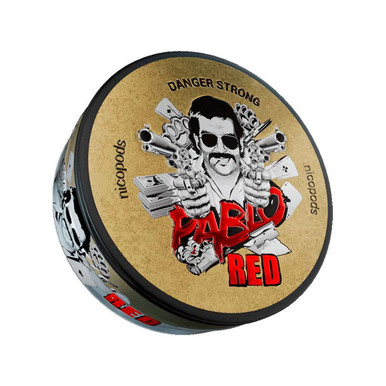
This page belongs to Pablo Red Nicotine Pouches, listed at £3.85. Our record holds one declared strength, 30mg, a single variant at that figure and that price, one product image, and a stock state reading in stock as this was written. It also holds something unusual, which is the reason this page is shaped the way it is: the flavour field for this listing is empty. Not vague, not broad — empty. There is no flavour tag against Pablo Red in our data at all, which is why you will find this can filed on only two shelves rather than the usual three, with no flavour grouping among them.
That absence governs everything below. A product page normally spends a third of its length on taste, and this one cannot, because we do not have the information and we are not going to manufacture it. What you get instead is more about the object, the format, the condition a can arrives and stays in, and how this listing sits against the rest of our shelves. A page that says less and means it is worth more on an age-restricted product than a page that reads well because somebody filled the gaps in with plausible sentences.
The full guide to Pablo Red Nicotine Pouches
4,931 words on how it eats, who it suits, how to serve it and what to put beside it.
Pablo Red: a short record, honestly reported
The rest of the ground rules are the same ones we apply catalogue-wide. We do not print ingredient lists. We do not describe what happens inside a pouch or inside a person. We make no statement about anybody's wellbeing in any direction. We do not tell any individual which number on a lid belongs to them. Where a reasonable question runs past our data, the answer is that we do not hold it.
This can is filed in our Strong band, currently 132 listings deep, and on the Pablo brand page with the other 55 lines we carry from that brand. It is an adult nicotine product, sold to buyers aged 18 or over who already use nicotine, and the full wording sits at the foot of the page.
The tin, the pouch, and the hour that follows
Physically this is the shallow round tin the whole category uses. The lid lifts clear and presses back onto a lip. The lid face carries the brand, the product name and the milligram figure, which matters more than it sounds once several cans are stacked in a drawer and you are reading the tops rather than picking each one up. Inside, the pouches lie flat in a ring. The underside of the lid is a hollow well with a rim around it, and that well is the catch compartment where spent pouches go until there is a bin.
A pouch itself is a small soft rectangle with rounded corners, light enough to vanish in a closed hand. Our record does not state the portion count, the weight of one pouch or the diameter of the tin, and we are not going to estimate any of them. Those figures are printed on the packaging by the manufacturer, and a guess published here would only compete with a number that is already authoritative. Where the can and this page disagree, the can is right and our record needs correcting.
In use, one pouch is seated under the upper lip and left alone. Most people find a fresh one feels bulkier than it looked in the tin and that the impression fades inside a minute or two as it settles into the space. After that it is largely unremarkable to hold in place; people talk with one in and drink with one in. Some eat with one in and some take it out first, which is a preference rather than a rule, and we are not going to write a preference up as instruction.
Duration has no single answer. The honest range runs from ten minutes at one end to the better part of an hour at the other, and the same person varies day to day. Removal is a fingertip job, spent pouches go into the well under the lid, and when the well is full its contents go into general waste — not a sink, not a plant pot, not out of a car window. Used pouches are small, pale and easy to lose on a desk or a console, which is the practical reason the tin should be closed and out of reach of children and animals whenever it is not in a hand.
What we cannot tell you about the taste
The name is a colour. That is the whole of it. Red is not a flavour word, it is not a fruit, and it is not a family. In confectionery, red is used as shorthand for a cluster of things — cherry, strawberry, raspberry, redcurrant, sometimes cola, sometimes cinnamon — and different manufacturers use it for different members of that cluster. Some use it for no flavour reason at all and simply as a lid colour that distinguishes one line from another.
Our record does not resolve any of that. The flavour array for this listing is empty, which is a different state from a broad tag: a broad tag would at least tell you the family, whereas an empty field tells you nothing. It also means this can does not appear on any flavour shelf on our site, so you will not find it by browsing a flavour grouping, only by brand or by declared figure.
We are not going to close the gap by inference. We could write a confident paragraph about how red cans usually taste and it would read perfectly well, and it would also be us describing a category rather than a product, which is exactly the kind of sentence an age-restricted listing should not carry. So the honest position is stated plainly: we do not hold a flavour description for Pablo Red, and we cannot tell you what it tastes like. The packaging states whatever the manufacturer has chosen to state, and that is the only source worth trusting on this particular question.
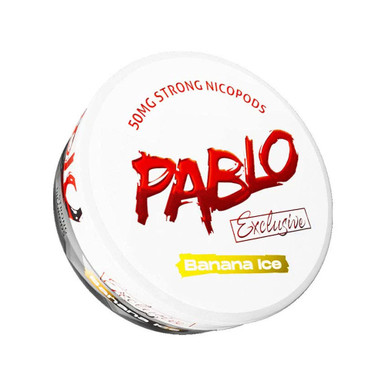
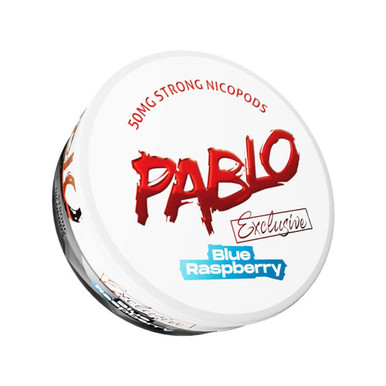
If knowing the flavour before buying matters to you — and for many people it does — the sensible move is to choose a listing where the name does the work. Within the same brand and at the same £3.85, Pablo Exclusive Blue Raspberry and Pablo Exclusive Banana Ice both put the fruit in the title, and both are in stock at the time of writing. Elsewhere on the shelves the same is true of Clew Blueberry at £39.90 and Elf Bar Blueberry Raspberry at £29.90. None of that is a criticism of this can. It is simply that a colour on a lid is not information and a fruit in a name is.
Keeping a can in the condition it arrived in
This is the longest section on the page, and it is here because condition is the one thing about pouches that people reliably get wrong and then attribute to the product. A can that has been handled badly does not behave the way it did on the day it was opened, and a good proportion of the complaints that begin "this one was disappointing" turn out, once you ask two questions, to be storage stories.
Dry pouches, moist pouches, and why it matters
Pouches across this category are produced at a range of moisture levels. Some lines are noticeably dry to the touch, holding their shape like a small firm cushion and taking a little longer to settle once seated. Others are distinctly damp, softer in the fingers, faintly cool to hold, and quicker to take the shape of the space they are put in. Most sit somewhere in between. Our record does not state where this listing falls on that scale and we are not going to guess, because the can in your hand is the only honest source for it.
Neither end is better than the other and people have firm preferences in both directions. What matters practically is that a damper pouch has more to lose. Moisture only ever travels in one direction over time, which is out of the tin, so a line that starts damp changes more noticeably over a fortnight of being opened and closed than a line that started dry. If a can seems to have shifted character since the first day, moisture loss is the first thing to suspect and very often the whole of the explanation.
The lid is a lid, not a seal
The press-fit lid on these tins is designed to be opened and closed many times a day, which is a different engineering problem from keeping air out for a month. It is not airtight and it is not supposed to be. The practical consequence is that an open can has a working life measured in weeks rather than months, and a sealed one has a longer one.
Two habits do nearly all the work. Close the lid all the way round, pressing evenly rather than pushing one edge down and trusting the rest — a lid seated at three-quarters looks shut and is not. And empty the catch well regularly rather than letting a fortnight of spent pouches sit against the underside of the lid, a few millimetres above the fresh ones. Some people bin a used pouch immediately and keep the well permanently empty as a matter of routine, which is tidier and costs nothing.
Heat, and the places tins get left
Heat does more damage than dryness and does it faster. A tin on a dashboard on a summer afternoon, a tin in a coat pocket hanging over a radiator, a tin sitting on top of a laptop that has been running all day — all three reach a temperature that changes how a can behaves, and a tin that has been hot and has then cooled does not come back to where it started. Direct sunlight does a slower version of the same thing, including through a window on a cool day.
The rule that covers all of it is thoroughly unglamorous: cool, dark, dry and closed. A kitchen drawer, a bedside drawer, a desk drawer, the inside pocket of a bag that does not live in a car. There is nothing on our shelves that needs anything more elaborate than that, and no storage product worth buying to achieve it.
Cold storage, dating, and the questions we cannot settle
Some people keep sealed cans in a fridge. We hold no manufacturer guidance on refrigeration for this line, so we neither suggest it nor argue against it — anything we said would be our opinion wearing the clothes of advice. If you do it, the one thing worth knowing is that a cold tin brought into a warm room collects condensation on the outside, so let it reach room temperature before the lid comes off.
On dating, our record holds no expiry date, no batch date and no best-before figure for this listing. Whatever dating the manufacturer prints on the can is the authority, and if the printed date and this page ever appear to conflict, the printed date wins because it is the only one of the two that came from the people who made the product. If several tins arrive together, treat them as you would anything else in a cupboard: oldest first, the rest closed and out of the light, and every can — open or sealed — kept out of reach of children and pets.
Buying several at once, and rotating them
At £3.85 a listing it is common enough to order more than one tin at a time, and the only thing worth planning is the order you open them in. Sealed cans hold their condition better than open ones, so the sensible pattern is the same one a cupboard gets: one tin open at a time, the rest closed and put away somewhere cool, and the oldest opened first. People who keep four or five cans on the go simultaneously tend to find the later ones flatter than the early ones, which is not a fault in the product but the predictable result of five press-fit lids being opened and closed over a month instead of one.
The second small habit is labelling nothing and reading everything. Because lids carry the brand, the name and the figure on the face, a stack of tins can be read from above without picking any of them up — provided the stack is the right way up and the lids are actually seated. That is the entire filing system most people need, and it is the reason the milligram figure printed on the lid earns its place there.
Travel, pockets and the small disasters
A tin survives a trouser pocket for a day without complaint. What it does not survive well is being loose in a bag with keys and a water bottle, where the lid gets worked open by degrees over a few hours and a can quietly dries out with nobody noticing until it tastes flat. An inside pocket, a zipped compartment or a rigid section of a bag solves it. The other common loss is a dropped open tin, which scatters pouches across a floor and effectively ends the life of most of them; opening a can over a table rather than over a pavement is a habit worth acquiring cheaply.
Moving between cans on our own shelves
Most people who buy pouches try more than one line, and the move between them is where confusion usually starts. This section is about what actually changes when you switch from this can to another one on our shelves, and what does not.
The declared figure does not travel
The number printed on a lid is a manufacturer's declaration for that product. It is not a shared unit of comparison between brands, because it does not carry any of the other variables with it. Two cans from two companies printing the same figure can differ in pouch size, in moisture, in format and in how the flavour is built, and a milligram number says nothing about any of those. So moving from this 30mg listing to another can showing 30mg is not a like-for-like swap in any sense we can evidence, and moving to a higher or lower figure is not a step up or down a ladder that exists outside the individual lid. We print every declared figure we hold and we stop there.
Format changes more than people expect
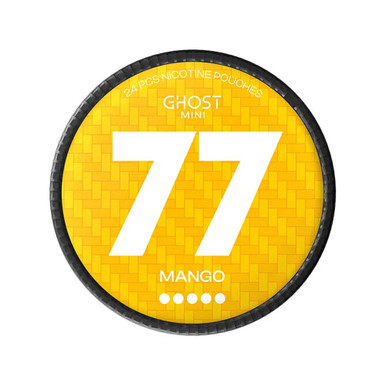
The bigger practical difference between two cans is usually physical rather than numerical. Some lines are built on a slim pouch, some on a wider one, some on a shorter mini format, and the same person can find two cans with identical printed figures entirely different to have seated. 77 Ghost Mini Mango at £39.90 is a mini-format listing on our shelves and will not feel the same in the mouth as a standard tin even before flavour comes into it. This is the variable most often ignored when somebody says a can did not suit them, and it is the one our data speaks to least, since we do not carry pouch dimensions as a field.
Flavour tags do not mean the same thing across brands
Our flavour tags are shelving labels, designed to make a catalogue of hundreds of listings browsable. They are deliberately broad and they are applied at the level of a family, not a recipe, so two cans sharing a tag can be very different in the mouth. Moving between brands by tag alone therefore produces surprises reasonably often. A mint can from one line and a mint can from another are both correctly tagged and may share very little else — Klint Avalanche Mint at £36.90 and Edge Mint at £14.95 sit on the same shelf and are separated by more than price. On this particular listing, of course, there is no tag to move by at all.
Price per listing is not price per can
This is the comparison most worth being careful with. Our shelves carry listings from £3.85 to £39.90 and above, and those prices describe different things. Some listings are single cans, some are multi-can arrangements, and our record does not hold a cans-per-pack figure for every product — including this one, where the field is empty. So a £39.90 listing like Denssi Blueberry Freeze or Cuba Ninja Coconut is not straightforwardly ten times a £3.85 one, and we are not going to publish a per-can figure derived by division. The listing page and the basket state exactly what an order contains before payment. That is where the arithmetic belongs.
What does not change
Three things stay the same wherever you move on our shelves. The tin geometry is effectively standard across the category, so the lid, the ring of pouches and the catch well behave the same way from brand to brand. The storage logic above applies identically to every can we sell. And the age rules apply identically too: every nicotine listing on the site is sold only to adults aged 18 or over, with verification on orders and identification possibly requested at delivery.
Thirty milligrams, and what a number on a lid is
The 30mg here is a declared figure, printed by the manufacturer and reproduced by us. It is not a score, not a rating, not a difficulty setting, and a higher number is not an achievement or a sign of anything. We publish declared figures because somebody buying an age-restricted product is entitled to know what is on the can before it arrives, and for no other reason.
We sort those figures into three shelf bands so a catalogue can be browsed: Medium Strength, Strong, and Extra Strong. This can sits in the Strong band with 131 other listings. Those band names are our own convention for organising a shelf, not an industry standard and not a measurement, and a product does not change by being filed differently.
People ask us which figure they should be buying. We cannot tell you. It is not evasion and it is not unhelpfulness by policy — a shop has no basis on which to make that judgement about an individual, and a confident answer would be a guess in a suit. What we will do is print every figure we hold, keep the bands consistent so browsing works, and answer factual questions about what is in a listing. The decision itself belongs to the person making it.
Where this can sits inside Pablo
We list 56 Pablo products and they are not a single ladder. There are plain-named cans like this one, an Exclusive line, and Edition lines with metal words in their names, and the naming does not track the declared figure in any consistent direction. This plain-named can declares 30mg; the Gold Edition listings we carry declare 17mg; the Silver Edition ones declare 10mg. An unadorned name is not therefore an entry-level product and a metal word is not a promotion. Read the figure on the listing and ignore the vocabulary.
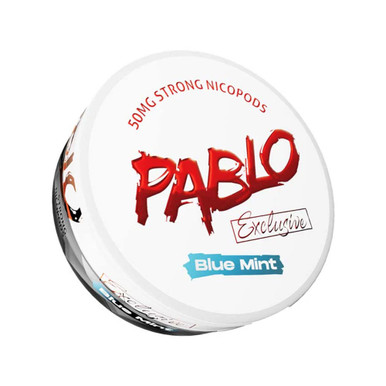
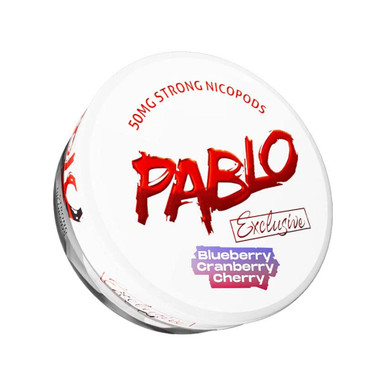
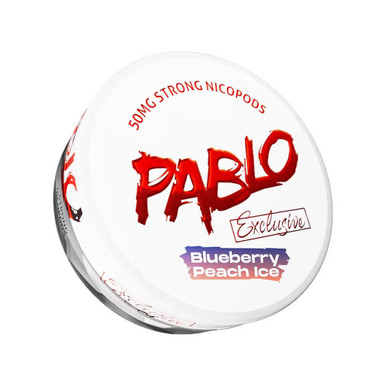
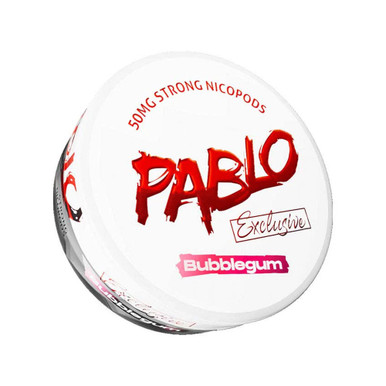
On price, the plain cans and the Exclusive line share the same £3.85 on our shelves, which makes the Exclusive listings the cheapest way to move to a flavour you can actually read from the name. Pablo Exclusive Blue Mint is the mint entry in that line. Blueberry Cranberry Cherry stacks three fruits into one name, Blueberry Peach Ice pairs fruit with a cold word, and the Exclusive Bubblegum can is the sweetest-sounding name on that shelf. All are £3.85 and all are marked in stock. Higher up the price list, Gold Edition Blue Raspberry is a £19.95 listing and currently available. To see the lot with prices and stock marks in one view, all 56 Pablo listings sit on one page.
What people keep beside a can like this
Buying two or three cans at a time is normally about contrast rather than supply, because one flavour used continuously stops registering. Where this can is concerned the logic is a little different, since we cannot tell you what it is contrasting with. What we can say is where people go for variety on our shelves generally.
The berry and fruit shelves take most of the traffic. Killa Apple at £33.50 is a single clear fruit in the name. Fumi Fiery Lime at £27.90 puts a citrus next to a heat word, which is an unusual pairing to see on a lid and is the reason it gets picked up. For a cold register rather than a fruit one, the mint listings across every brand are the largest flavour grouping we keep. All of those cans are in stock at the time of writing, though stock moves and the listing page is always more current than this paragraph.
If you would rather browse than read, everything we stock is on a single index with prices and availability visible, which is usually quicker than guessing at a category.
Choosing, when the listing offers one thing
There is a single variant behind this page: 30mg at £3.85. No second strength, no alternative size, no multipack attached here. So the decision is narrower than most — it is whether a can with no published flavour description and a declared 30mg is what you came for. If the flavour uncertainty is the sticking point, the answer is not to read this page harder; it is to choose a listing that names its flavour. If the figure is the sticking point, browse by band rather than brand, with Medium and Extra Strong sitting either side of the Strong shelf this can is on.
Buying it, delivery and the age check
£3.85 is the listing price, and the basket confirms what an order contains before anything is paid. Our stock mark reads in stock as this was written; stock states move and the live listing is always more current than prose around it. If a product becomes unavailable between reading this and clicking through, the product page says so rather than quietly taking an order.
These are age-restricted goods. We sell to adults aged 18 or over, we operate age verification on orders, and identification may be requested when the parcel is handed over — a courier is entitled to refuse the handover to anybody who cannot produce it or whom they judge to be underage. We will not knowingly supply an order placed for someone under 18. Parcels arrive in plain outer packaging. The storage logic above applies from the moment the box lands, so a parcel left in a hot porch all afternoon is worth collecting sooner rather than later.
Getting somewhere else from here
Because this listing has no flavour shelf, there are only two routes out of it by category: the Strong band, which collects every listing we file at this sort of declared figure across all brands, and the Pablo page, which holds the brand's full range. Sideways from Pablo, the Cuba brand page is the other large single-brand shelf we keep and is organised similarly, with several distinct product families under one name. For a wider sweep, the full shop index lists everything at once, which is the fastest route when you are not sure what you are looking for.
Questions this listing raises, answered as far as we can
What flavour is Pablo Red?
We do not know and we are not going to guess. The flavour field for this listing is empty in our record, which is why the can appears on no flavour shelf on our site. Red is a colour, not a flavour word, and different manufacturers use colour names for different things. Whatever the packaging states is the authoritative answer, and the packaging is the only place it exists as far as we are concerned.
Is red always a fruit flavour in this category?
No. Red is used across confectionery and this category for a spread of different things, and it is also used simply as a lid colour to separate one line from another with no flavour meaning attached. Because usage varies by manufacturer, a pattern elsewhere would not be evidence about this can. We would rather leave the question open than answer it from a generalisation.
Why is there no flavour tag when other Pablo cans have one?
Our tags come from the product data we hold, and for this listing the field is empty. We have chosen to say so rather than to fill it in with a best guess, because an invented tag would put the can on a flavour shelf where a shopper would find it under false pretences. An empty field reported honestly is less useful and more truthful than a plausible one.
Does 30mg make this one of the strongest cans you sell?
Thirty milligrams is the figure the manufacturer declares for this product, and it places the can in our Strong band rather than the Extra Strong one, which holds listings we file at higher declared figures. That is shelf arithmetic and nothing more. We do not rank the catalogue, we do not present a high figure as desirable, and we cannot tell you how any figure will suit a particular person.
How many cans is £3.85?
Our cans-per-pack field is empty for this listing, so we are not going to state a number or derive one by comparing prices with a different product. The listing page and the basket show exactly what the order contains before payment, and that is the right place to check it.
How many pouches are in the tin?
Not something we hold. The portion count is printed on the packaging and we do not carry it as a field here, so any figure from us would be an estimate competing with a printed fact. Read the can when it arrives.
Will an open can keep for a month?
It may still be usable, but it will not be the same as it was on day one, because the press-fit lid is built for repeated opening rather than for sealing and moisture leaves an open tin steadily. Kept closed, cool, dark and dry, the decline is slower. We hold no expiry date for this listing, so the dating printed on the can is the figure to work to.
Can I store cans in the freezer?
We hold no manufacturer guidance on freezing or refrigerating this line, so we are not going to advise either way. What we can say is the general physics: anything brought from cold into a warm room collects condensation on the outside, so letting a tin reach room temperature before opening it avoids water where you do not want it.
Is this the same product as one of the Exclusive cans under a different name?
We hold nothing that would let us answer that. Our record treats them as separate listings with separate names, prices and figures, and it does not carry recipe or formulation data that would let anybody establish whether two products are related beyond the brand they share. We are not going to speculate about it either way.
Why will you not just recommend something?
We will tell you prices, declared figures, stock states, flavour tags where they exist, and how listings sit against one another on our own shelves. We will not tell anybody which can belongs to them or rank the catalogue by quality. On an age-restricted product the difference between information and encouragement matters, and we would rather be useful on the first than helpful-sounding on the second.
How do I find other cans at the same declared figure?
Browse the band rather than the brand. The 132 listings in our Strong band are everything we file at this sort of declared number across every manufacturer we carry, with prices and stock marks visible on each. That is a shelving convention rather than a claim that those listings are equivalent to one another, but it is the fastest way to see the options in one place. If you want a different brand's take entirely, the Cuba listings are the other large single-brand grouping we keep.
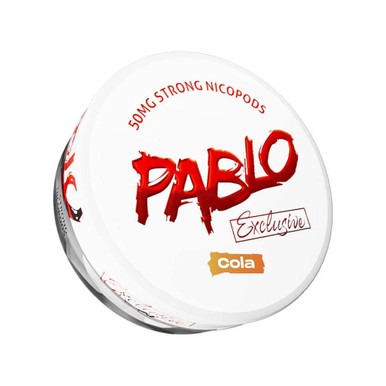
Is the product image on this listing the current packaging?
Our record holds one image for this listing and we publish it as we hold it. Manufacturers do change lid artwork and packaging from time to time without telling retailers in advance, so an image is a reasonable guide rather than a guarantee that the tin arriving will match it pixel for pixel. The product itself is identified by the name and the declared figure on the listing rather than by the picture, and if what arrives does not match what we have published we would want to know.
Does anything on this page say the product is good or bad for me?
No, and that is deliberate. This page makes no statement about anyone's wellbeing in either direction. It describes an object, prints the figures our record holds, compares prices and listings across our own shelves, and states plainly where the data stops — which on this particular listing is earlier than usual.
The wording that has to be here
Nicotine is an addictive substance. That is true of this listing exactly as it is true of every other nicotine product on the site, and it is the single most important line on the page.
- Sold only to adults aged 18 or over who already use nicotine. We do not sell to under-18s, and identification may be requested on delivery.
- This product is not a licensed stop-smoking medicine and is not offered, described or intended as one.
- It is not intended for non-smokers, for anyone who does not already use nicotine, for under-18s, or for anyone pregnant or breastfeeding.
- Nothing on this page is medical advice. Questions about nicotine and your own circumstances belong with a qualified professional, not a retailer's product listing.
- Keep the tin closed and out of reach of children and animals. Spent pouches go into general waste.
To summarise
Pablo Red is a £3.85 listing carrying a declared 30mg, filed on our Strong band and the Pablo brand page, in stock as this was written, and with no flavour tag in our record at all. That last point is the honest headline: we cannot tell you what it tastes like, the name is a colour rather than a description, and the packaging is the only place an answer exists. Everything else here — the tin, the lid, the catch well, the storage logic, the way listings compare on our shelves — applies as it does across the category, and on portion count, dating and flavour the can in your hand outranks this page every time.
More from Pablo
More strong pouches
More pablo pouches
Where this sits
Pablo Red Nicotine Pouches appears in these categories. Browse them, or jump to something close.
You might also like