Home / Medium Strength / XQS The Peppermint Nicotine Pouches
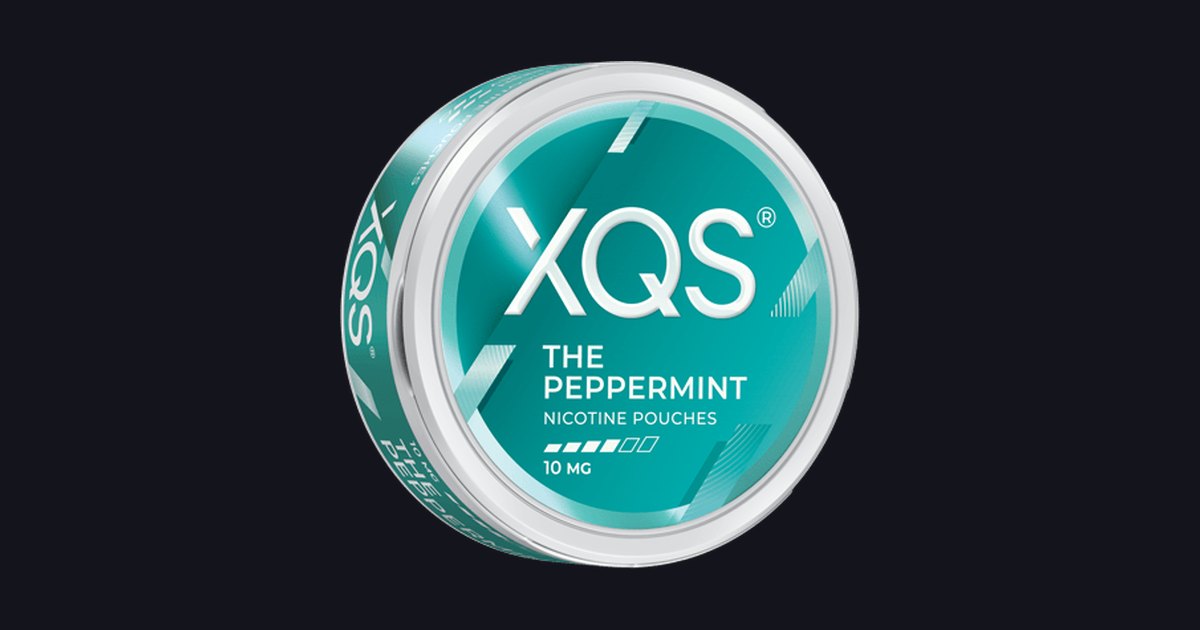
XQS · 10mg · 10-can pack
Read the full guide
XQS The Peppermint Nicotine Pouches
£39.90
✔ In stock — ready to ship
100% tobacco-free
Free over £20
Same-day dispatch
Secure checkout
XQS The Peppermint Nicotine Pouches are in stock and available to order as this page is written. The price on the listing is £39.90. Our record carries one declared strength and one only, 10mg, so there is no variant ladder to work through on this product — what you see is the whole of it. Against the pack quantity we hold a figure of ten cans, which means the £39.90 is a multi-can price rather than the cost of a single tin, and that is worth having clear in your head before you compare it with anything else on the site.
The flavour record holds a single entry: mint. That one word is doing a great deal of work on a product whose lid says Peppermint, and the gap between those two things is the most interesting honest thing on this page. We will come back to it properly in the next section rather than glossing over it here.
The full guide to XQS The Peppermint Nicotine Pouches
4,970 words on how it eats, who it suits, how to serve it and what to put beside it.
XQS The Peppermint: the listing as we hold it
Physically this is the standard round pouch tin that runs through most of what we stock. A shallow cylinder you can close a hand around, a lid that lifts clear and presses back down onto a lip, printing on the top face giving brand, flavour name and the milligram figure, and a shallow compartment recessed into the underside of that lid. Inside, the pouches sit flat in a ring. We hold one product image against this listing, so what you see on the product page is the can and not a gallery of angles.
This is an age-restricted nicotine product, sold only to adults aged 18 or over who already use nicotine. The full compliance statement sits at the foot of this page and it is the section we would least like anyone to scroll past.
Peppermint as a taste, and what our own tags can and cannot tell you
Here is the position stated plainly. Our flavour record for this can contains the single tag mint. The record for the brand's other mint can, the 6mg one carrying the name The Spearmint, also contains the single tag mint and nothing else. The catalogue therefore draws no distinction between the two at the level of filed data. Anything written on this page that separates the two is a description of what the words peppermint and spearmint conventionally mean as flavour terms, not a reading of a tag we hold, and we are not going to pretend otherwise by dressing a general description up as a product fact.
What the words themselves mean, described as taste and aroma only, is genuinely distinct and worth setting out. Peppermint as a flavour term points to the sharper, higher-pitched end of the mint family. The aroma is penetrating and slightly medicinal in the old-fashioned sense of that word — a clean, almost camphorous lift that arrives at the front of the nose rather than the back. On the tongue it reads cool and narrow, with a brightness that cuts rather than spreads, and comparatively little sweetness of its own. It is the mint of a peppermint cream or a strong after-dinner mint: assertive, linear, not especially rounded.
Spearmint as a flavour term points the other way. It is softer, greener, more herbaceous, closer to the leaf than to the extract. The sweetness is more obvious and the cool edge is gentler and wider. It reads as a chewing-gum mint rather than a confectionery mint, and people who find peppermint too stark tend to land on spearmint instead. Menthol, which appears as a separate flavour word across this catalogue, is different again — a frost-forward character in which the cold sensation dominates and the herbal or leafy part of mint recedes behind it.
Those three descriptions are the conventional meanings of three words. They are not scale readings. No manufacturer in this category publishes a cooling figure, a sweetness figure or an intensity figure, our record holds none, and any page that tells you a mint scores seven out of ten for chill has invented the number. What we can say about this specific can is what is printed on it and what is filed against it: the name is The Peppermint, the tag is mint, the declared figure is 10mg, and the rest is the general meaning of a flavour word.
One further honest note on the aroma. On a dry pouch, the smell that comes off an opened tin is a smaller version of the flavour rather than a preview of something else. If you want a sense of where a mint sits before you commit to a ten-can price, the tin opening is the most direct information available, and it arrives immediately rather than developing over a minute the way a wet product might.
Carrying it, using it, and the rules that are not ours to state
This is the section that matters most for a product of this shape, because the format's defining characteristic is that it is quiet. A pouch tin is roughly the footprint of a small jar of lip balm and rather flatter. It goes in a coat pocket, a jeans pocket, a bag pocket or a glove box without announcing itself, and the printing on the lid is the only thing about it that reads at a distance. Ten cans, which is what our pack figure says £39.90 covers, will not fit in a pocket together — that is a drawer or a cupboard quantity, and the sensible pattern is to keep one tin on you and the rest where you keep everything else.
What using one actually looks like
A pouch is taken from the tin and placed under the upper lip, where it sits between lip and gum along the ridge. It does not need to be held in place, moved around or chewed. Most of the physical business of it is over within a few seconds of it going in, after which it stays put. There is no action to perform and nothing to attend to, which is the whole reason the format reads as discreet. Users typically keep a pouch in somewhere between about fifteen minutes and an hour; some keep one in for longer and some take one out after five minutes. That range is a description of what people do, not a recommendation, and there is no correct figure inside it.
The first minute or two is the loudest part physically. A dry pouch takes a moment to settle against the lip and there is a texture to it that you notice and then stop noticing. Slim, dry pouches of the type XQS uses sit reasonably flat; the broader, moister formats used by some other brands sit more heavily. If you have found one format uncomfortable in the past, that is usually a format question rather than a brand or flavour question, and it is worth trying a different shape before writing off pouches generally.
Opening a fresh tin, and the first handful
A new can arrives sealed and the seal is the thing that has been keeping the aroma in, so the tin is at its most characterful in the first minute after it is opened and settles slightly from there. That is not a defect and it is not a countdown; it is simply what a dry product in a rigid tin does once air has been let at it. The practical consequence is only that a can finished over a fortnight reads a little differently at the end than at the start, and people who notice that tend to buy smaller quantities more often rather than larger ones less often.
The pouches sit flat in a ring, which means the first few come out easily and the last few sometimes want a fingernail. Tipping the tin rather than digging in it is the easier method and keeps the rest of the ring undisturbed. There is nothing to be gained from rearranging them and a tin that has been shaken hard will simply have a less tidy ring in it.
The catch compartment and getting rid of one
The recess under the lid is the single most practical feature of the tin and it is easy to miss on first use. It is there so that a used pouch has somewhere to go when there is no bin within reach. You lift the lid, drop the used pouch into the shallow compartment on its underside, close the tin, and deal with it later. It is not a storage area and it is not meant to hold a week's worth — a used pouch put in there and forgotten will make itself known when you next open the can, and it will also sit against the unused pouches' side of the lid. Empty it when you get to a bin.
Disposal itself is ordinary household waste. A used pouch goes in a bin, not down a sink and not out of a car window. The tin is a rigid container and where you live will have its own rules about which bin that belongs in; ours is not the page to tell you what your council has decided.
Venue, employer and transport rules belong to whoever set them
We are asked constantly whether pouches are allowed in offices, on aircraft, in gyms, on trains, in hospitals, in stadiums and on customer sites. We will not answer that, and the reason is not evasiveness. Those rules are set by the venue, the employer, the carrier or the operator; they vary from one to the next; they change without telling anyone selling the product; and a shop in our position guessing at them would be giving you a confident answer with nothing behind it. The person who can tell you is the person who wrote the policy — your employer's own conduct policy, the airline's conditions of carriage, the venue's terms of entry, the site induction. Ask them, and treat any answer you get from a retailer, including this one, as worthless by comparison.
What we can say factually is what the format is: a small sealed pouch held in the mouth, producing nothing visible and requiring no equipment. What that means under someone else's rules is entirely a matter for them, and plenty of policies cover nicotine products as a class regardless of format.
Carrying more than one flavour
People who carry a tin daily very often carry two, and the second one is usually deliberately unlike the first. A mint and a fruit is the common pairing, because the two do not blur into each other by the end of a week. If that is a pattern you recognise, the pairing section below is written for exactly that and the links in it give a reason for each suggestion rather than listing cans at random.
10mg as a number printed on a lid
The figure on this can is 10mg. That is a declared figure for a pouch, published by the manufacturer, and it is the only strength this product comes in. Our record gives no second variant, so the choice on this listing is whether to buy it, not which version to buy.
What that number is useful for is comparison between cans that declare their figures the same way. What it is not is a measure of experience, and it does not translate cleanly across brands or formats. Two cans both marked 10mg from different manufacturers, in different pouch sizes, with different moisture levels, are not interchangeable in any exact sense, and the number on the lid will not tell you which way the difference runs. It is a label figure. Read it as a label figure.
On our shelves this can is filed under Medium Strength, which currently holds 135 listings. That is by a distance the largest strength band we carry, and it is where most of the catalogue's everyday cans sit. Above it we keep the Strong band and above that the Extra Strong band, and below it a much smaller low-strength shelf where the brand's 6mg mint can is filed.
We cannot advise which strength suits anybody, and we will not. Nothing on this page should be read as saying a higher figure is better, more advanced, more serious or more worth having, because none of those things is true and a bigger number on a lid is simply a bigger number on a lid. The bands exist so that the catalogue can be sorted and searched, not so that anyone can be ranked by which shelf they buy from. If you already use nicotine and already know what a declared figure means to you in practice, the band labels help you find things. If you are trying to get an answer out of a shop about what figure is right for you, we do not have one and would be inventing it if we gave you one.
What people keep alongside this can
The second thing to know about mint, after the peppermint-and-spearmint business above, is that a single mint on its own is the most commonly abandoned flavour choice in the catalogue — not because anything is wrong with it, but because a narrow, linear flavour gets monotonous faster than a complex one when it is the only thing you have. Most people who keep mints keep something else beside them. What follows is that pairing logic, with a reason attached to every suggestion.
Staying inside the mint family but changing the character
The gentlest move is sideways rather than away. White Fox Double Mint at £34.90 is the obvious comparison point because it declares a doubled mint construction in its own name, which is a different proposition from a single peppermint reading. Klint's Arctic Mint can, £36.90 takes the frost-forward direction described earlier, where the cold character leads and the leafy part sits behind it. SYX Cool Mint at £29.90 is the same family again at a lower price point, and it is worth noting that these three are priced across a £6 spread for what our records file as broadly the same flavour family — a reminder that price in this category tracks brand and pack quantity more than it tracks flavour.
If the spearmint end is where you want to go and you would rather not commit to a ten-can price to find out, two small-format cans make that cheap to test. Velo's Bright Spearmint can at £4.19 and Edge Spearmint at £14.95 are both in stock and both sit at the single-can end of our pricing, so you can put a spearmint next to this peppermint without spending £39.90 twice to do it.
Mint with a fruit built onto it
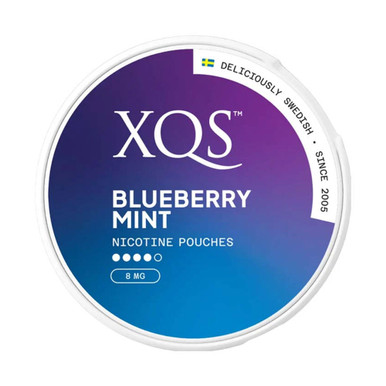
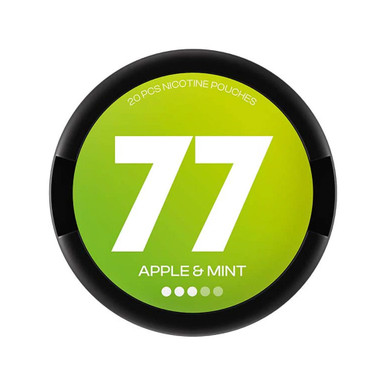
The most durable everyday pairing is a mint alongside a mint-and-fruit, because the two share enough to feel related and differ enough to stop either becoming wallpaper. 77's Apple Mint can, also £39.90 puts a sharp orchard fruit against a cool base and is the cleanest example of the construction. Within XQS itself, Blueberry Mint at £39.90 does the same job with a darker, rounder fruit, and because it is the same brand at the same price in the same tin it is the least disruptive change you can make from this can.
Going properly away from mint
The sharper break is to keep something with no mint in it at all. Pablo's Silver Edition Blueberry Peach Ice, £39.90 is a stone-fruit-and-berry construction with a cold note rather than a mint one, which sounds similar on paper and is not. UBBS Cola Ice at £19.95 goes further still into soft-drink territory, and Fumi's Dark Spice can, £27.90 is the furthest thing from a peppermint we would sensibly put in front of somebody who likes one — warm and spiced rather than cool and green. Nordic Spirit Frosty Berry at £4.49 is the cheap way to test whether a berry works for you at all before buying a ten-can quantity of anything.
Where this can sits within XQS on our shelves
We carry fourteen XQS listings, gathered on the XQS brand page. Read across them and a pattern shows up quickly: the pricing is flat. Effectively everything we hold from this brand sits at £39.90, which means the range cannot be read as a ladder from cheap to expensive. It can only be read on flavour and on declared figure, which is a more useful way to read a range anyway.
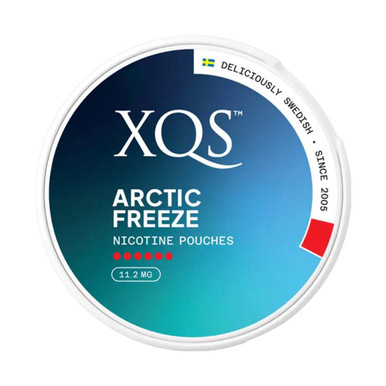
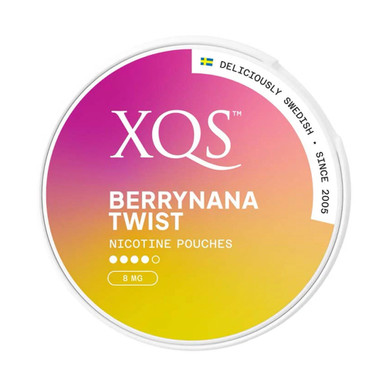
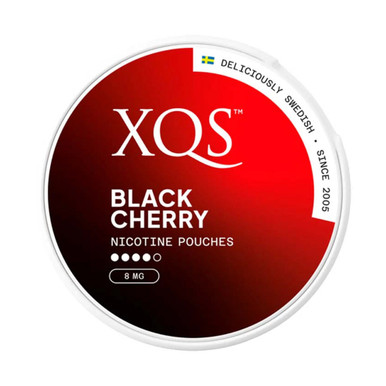
The mint core of the range is the pair this can belongs to — The Peppermint at 10mg and its 6mg counterpart — plus the cold-leaning Arctic Freeze can at £39.90, which takes the frost direction rather than the herbal one. Around that sits the fruit work. Black Cherry, £39.90 is the dark, sweet corner of the range. Berrynana Twist at £39.90 is the most compound flavour XQS offers here, combining berry and banana characters rather than presenting one note. Citrus Cooling, £39.90 is the bridge between the fruit and the cold halves of the range, and Cola Lime at £39.90 is the soft-drink entry. Every one of those is in stock as written.
If you want to see how a brand with a different pricing philosophy structures a range, the Pablo shelf and the Cuba shelf are the two largest brand pages we keep and both spread across several price points rather than sitting on one. Comparing the three brand pages side by side tells you more about how this market is priced than any single product page can.
Keeping a can in usable condition
Dry pouches are less demanding than moist ones but they are not indifferent to how they are kept. The principles are dull and they work.
- Keep the lid closed. The single largest cause of a tin going flat before it is finished is being left open on a desk or a windowsill. A dry pouch that has been sitting in open air loses its aromatic edge, and that is the part of the flavour you actually notice.
- Keep it away from heat. A car dashboard, a radiator shelf and a sunny windowsill are all worse than a drawer. Heat does the aroma no favours.
- Keep it out of a hot pocket for long stretches. Carrying a tin is fine; leaving one wedged against a warm body all day every day for a month is how a can arrives at the end of its life tasting duller than it started.
- Do not refrigerate a dry can on principle. Some people do it with moister products; for a dry pouch there is nothing to gain, and moving a tin in and out of a cold place invites condensation, which is the one thing a dry pouch genuinely does not want.
- Buying ten cans is a storage decision as well as a price one. Nine of them will be sitting somewhere for a while. Somewhere cool, dark, closed and out of reach of anyone under 18 is the whole of the advice.
Check the date printed on the can. Manufacturers put one there and it is the only date information that exists for the product — we do not publish batch or production dates on our listings and could not tell you one if you asked.
Choosing, when there is only one thing to choose
On most listings this section is about picking a variant. Here it is not, because the record holds exactly one: 10mg at £39.90. The decisions that remain are about quantity and about whether this flavour is the one you want.
On quantity, the ten-can figure is the thing to weigh. It is a commitment to one flavour in a way that a single tin is not. People who buy at this quantity are generally buying something they already know suits them, and buying a ten-can pack of a flavour you have never had is how a cupboard ends up with nine cans in it that nobody is reaching for. If this can is unfamiliar, the cheaper single-can listings mentioned in the pairing section above exist precisely so that testing a flavour family does not cost forty pounds.
On flavour, the decision is between the peppermint reading and its neighbours, and the honest summary of everything above is this: the name on the lid says peppermint, the conventional meaning of that word is the sharper and less sweet end of mint, and our catalogue tag says only mint and therefore cannot confirm or deny it. You are buying the manufacturer's name for the flavour. That is normal in this category and we would rather state it than hide it.
Ordering, delivery and the age check
The listing is live and the can is in stock, so it can be added to a basket and ordered in the ordinary way. Stock positions move; the product page always carries the current one and this page does not, so if there is a conflict between the two, believe the product page.
Age verification is not optional and is not a formality we apply loosely. This is an 18+ product. Orders are subject to age checks, and ID may be requested on delivery. A courier can refuse to hand over a parcel where age cannot be established, and the parcel going back undelivered is the ordinary consequence of that, not an unusual one. Anyone ordering should be prepared to prove their age at the door and should not arrange delivery to somewhere nobody who can do that will be present.
On returns, an age-restricted consumable is not something we can take back and resell once it has left us, so please order the flavour you actually want rather than treating a ten-can purchase as reversible. If something arrives damaged or wrong, that is a different matter and a normal one to raise with us.
Finding this page, and the shelves around it
This can is reachable from four directions on the site and it is worth knowing all four, because they answer different questions. By strength, it sits on the medium band with the other 135 listings in that range. By brand, it sits among the fourteen cans on the XQS page. By flavour, it sits on our mint shelf, which is the biggest flavour shelf we keep at 148 listings and covers everything from the softest spearmint to the most frost-forward menthol. And if none of those is the right cut, the full shop listing holds everything we carry in one place and is the honest starting point when you do not yet know what you are looking for.
The strength shelves are worth a second mention as navigation rather than as a hierarchy. Strong and Extra Strong are filing categories that let you narrow 385 listings down to something readable. They are not a progression and there is no expectation attached to moving between them.
Questions people actually ask about this can
Is this the same flavour as The Spearmint with a different name on the lid?
We cannot tell you that from our records, and we would rather say so than guess. Both cans carry the single flavour tag mint in our catalogue, so at the level of filed data they are indistinguishable. What differs on the record is the declared figure — 10mg here, 6mg on the other — and the names the manufacturer has given them. Peppermint and spearmint are genuinely different flavour terms in general use, as described further up this page, but that is a description of the words, not a reading of a tag we hold.
How many cans do I get for £39.90?
Our record holds a cans-per-pack figure of ten against this listing, so £39.90 is a ten-can price rather than a single-tin price. That works out cheaper per can than most single tins on the site, which is the usual reason people buy at this quantity. It also means you are committing to one flavour ten times over, which is worth thinking about if you have not had this one before.
Does it come in any other strength?
Not on this listing. The record holds one declared figure, 10mg, and no second variant. The same brand's other mint can is filed at 6mg and is a separate listing with its own page. If you are browsing by figure rather than by flavour, the strength shelves linked above are the faster route.
Which strength should I buy?
We cannot answer that, and nobody selling you the product is in a position to. There is no figure we can point you at as right for you, and the shelf bands on this site are a filing system rather than advice. If you already use nicotine, you will have your own sense of what a declared figure means to you in practice; that is the only useful input there is, and it is not one we have.
Is 10mg a lot?
It is a middle figure by the standards of what we stock, which is why the can is filed on the medium shelf rather than either end. Beyond that the question does not have a real answer, because a declared figure is not a measure of experience and does not compare cleanly between brands or pouch formats. The number tells you what the manufacturer has declared. It does not rank the can against another one you have used.
Is it in stock right now?
It is in stock as this page is written, along with every XQS listing linked above — Arctic Freeze, Berrynana Twist, Black Cherry, Blueberry Mint, Citrus Cooling and Cola Lime are all currently available. Stock does move, though, and the product page carries the live position. Treat the product page as the authority and this paragraph as a snapshot.
What does the little tray under the lid do?
It is a catch compartment for used pouches, for the times when there is no bin to hand. Drop the used one in, close the lid, empty it at the next bin. It is not designed to hold several and leaving them in there is unpleasant the next time you open the tin.
How long is a pouch usually kept in?
Commonly somewhere between about fifteen minutes and an hour, with plenty of people at either side of that. There is no correct duration, we are not suggesting one, and the range above is a description of habit rather than an instruction.
Where is it made, and by whom?
We do not hold that information and will not invent it. Our record carries the brand name, the product name, the price, the declared figure, the flavour tag, the pack quantity and the stock position, and that is the full extent of what we can state as fact. Anything about factories, countries or company history would be something we had made up, and a product page is not the place for that.
Is there any nutritional or ingredient information on this page?
No. We do not publish ingredient breakdowns or composition detail for the products we list, and we are not going to summarise a can's contents from memory. What is printed on the physical can and its packaging is the manufacturer's own information and is the thing to read. If that is what you need before buying, read the can.
Can I mix this with other cans in one order?
Yes. Everything linked on this page can go into the same basket, including the cheaper single-can listings, and there is no requirement to stay within one brand or one strength band. Many orders are a large pack of a known flavour plus one or two small cans of something being tried out.
Why does the price not change between XQS flavours?
Because the brand's listings on our shelves all sit at £39.90, which is unusual but not unique — several brands price flat across a range. The effect is that nothing in the XQS line is positioned above anything else by cost, so a Black Cherry, a Cola Lime and this peppermint can are all the same outlay and the choice between them is purely flavour and declared figure. Why the manufacturer prices that way is not something we know.
Is a peppermint can interchangeable with a menthol one?
They are different flavour words and, in general use, they describe different things: peppermint points at a sharp, slightly camphorous herbal character, while menthol points at a frost-forward one where the cold note leads. Our catalogue files a great many cans under the single tag mint regardless of which word the lid uses, so the tags will not separate them for you. The name the manufacturer gave the can is the best guide available, and we would rather say that than pretend to a precision our data does not have.
Do you know when a flavour will be restocked?
Generally no. We do not publish restock dates because we are frequently not given firm ones, and putting a date on a page that then slips is worse than saying nothing. Everything linked from this page is in stock at the time of writing; where that changes, the product page for the can in question is where it will show.
The part that is not optional: legal and safety
- This is an 18+ product. We sell it to adults who already use nicotine, and to nobody else. We never suggest that anyone who does not already use nicotine should begin.
- Nicotine is an addictive substance.
- This product is not a licensed stop-smoking medicine and is not offered, described or intended as one. It is not intended for non-smokers, for anyone who does not already use nicotine, for under-18s, or for anyone who is pregnant or breastfeeding.
- We make no health, medical or therapeutic claim of any kind about this product, in any direction.
- Orders are age-verified. ID may be requested on delivery, and a courier may refuse to complete a delivery where age cannot be established.
- Keep it stored out of the reach of children and of anyone under 18.
In short
XQS The Peppermint is a ten-can pack at £39.90 with one declared figure of 10mg, filed on our medium shelf, carrying a single flavour tag of mint under a lid that says peppermint. The format is quiet, the tin has a catch compartment worth using, the storage rules are dull and effective, and the rules about where you may use it belong to whoever wrote them rather than to us. If you want to see the alternatives before deciding, the mint shelf is the widest view and the full catalogue is the widest view of all.
More from XQS
More medium strength pouches
More mint pouches
Where this sits
XQS The Peppermint Nicotine Pouches appears in these categories. Browse them, or jump to something close.
You might also like