
Home / Extra Strong / Pablo Exclusive Pear Nicotine Pouches
Pablo · 50mg
Read the full guide
Pablo Exclusive Pear Nicotine Pouches
£3.85
✔ In stock — ready to ship
100% tobacco-free
Free over £20
Same-day dispatch
Secure checkout
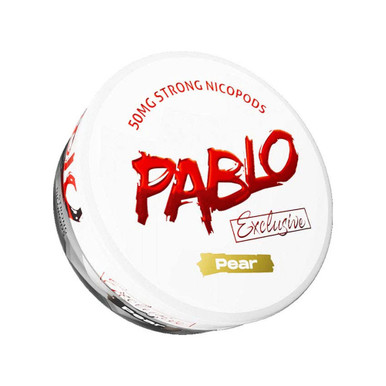
Pablo Exclusive Pear Nicotine Pouches carry a listed price of £3.85 and a single declared label figure of 50mg. One variant sits behind that price, not a range of them, so there is nothing further to select once you have decided on the can. Availability shows as in stock as this page is written, and our records hold a single photograph.
That is not a summary. It is the entire body of product-specific data we have for this listing, and it is unusually thin even by the standards of this catalogue, for a reason set out immediately below. Everything from here on is either derived from those facts, or is description of a format anybody can verify by handling one of these cans, or is marked plainly as an unknown.
The full guide to Pablo Exclusive Pear Nicotine Pouches
4,961 words on how it eats, who it suits, how to serve it and what to put beside it.
Everything we hold on this can
One notable gap: this can has no flavour tag
Most listings on this site carry at least one flavour classification, which is what puts them on a browsable flavour shelf. This one carries none. The flavour field in our data for this product is empty.
That is worth being direct about rather than papering over. It does not mean the can is unflavoured — the manufacturer has named it Pear, and that name is on the can. It means our catalogue has no flavour classification recorded against it, so the product does not currently appear on any of our flavour shelves. Somebody browsing by flavour family will not find it that way; they will only reach it through the brand, through the strength band, or by searching the name.
We could have quietly assigned it a tag ourselves and said nothing. We would rather say what the data actually contains, because a made-up classification is the sort of small invention that makes every other statement on a page less trustworthy. The consequence is that this page has two shelf links where most have three, and the section on where the can sits in the site is honest about that.
The three parts of the name
Pablo is the manufacturer's trade name, printed on the can by the company that makes it. It describes nothing about the contents. Everything we stock under it sits together on the Pablo shelf, currently fifty-six listings.
Exclusive designates a line within that brand. Sub-range naming is standard practice across this category and this is one instance of it. What the word is intended to signify — a production run, a defined group of flavours, a supply arrangement, or simply a label — has not been communicated to us, and we are not going to supply a confident-sounding guess in place of an answer.
Pear is the flavour name chosen by the manufacturer, and with no tag recorded against the product it is the only flavour information we hold at all. One word.
Pear, as far as a flavour name can take us
Writing a tasting note for a can where we hold one word and no maker's description requires some discipline, so here is the boundary drawn openly: what follows describes the pear flavour family in general terms, so that somebody can judge whether the territory is one they already know. It is not a description of this specific can, and it is not being passed off as one.
Pear is one of the quieter fruit names. Set against the loud end of the fruit map — citrus, berry, tropical — a pear note is characteristically soft, low-acid and rounded. Where an orange or a lime announces itself with sharpness, pear tends to arrive without an edge. It is a fruit whose flavour, in its natural form, is famously easy to lose; ripeness changes it dramatically and it does not shout even at its best.
In manufactured flavouring, pear splits into a few recognisable directions. There is the fresh, green, slightly crisp reading, which keeps a little bite and a mild floral quality. There is the ripe, honeyed reading, heavier and sweeter, closer to fruit that has been sitting in a bowl for four days. And there is the confectionery reading — the pear drop, which is a distinct thing in its own right: intensely sweet, sharply aromatic in a way real pear is not, and instantly identifiable to anybody who has met one. Those three targets produce quite different results, and a can labelled simply Pear does not tell you which the maker aimed at.
On aroma: a pear note is generally more present in the nose than it is loud on the tongue, but it is still a subtler aromatic than a citrus. Opening a can named for a pear will usually give less immediate scent than opening one named for a lemon. The pear-drop reading is the exception and can be very forward indeed.
What we can state without embellishing: the can is named Pear, our data holds no flavour tag for it, it is listed at £3.85, and the declared figure is 50mg. Anything more precise is the manufacturer's to say, and the can is where they say it.
Running more than one can: how pairing actually works
The most common pattern among regular customers is not loyalty to a single flavour. It is two or three cans kept on rotation, and the reasoning behind it is worth setting out properly, because it explains a lot about how this catalogue is used and how people end up choosing what they choose.
Why anybody keeps more than one
The plain explanation people give is that a single flavour used exclusively stops registering. This is not mysterious and it is not specific to this product category — it is the same reason people do not eat the same sandwich every day. A flavour encountered constantly becomes background, and the thing that restores it is an interval of something else. Rotating two or three cans gives that interval without requiring anybody to abandon a flavour they like.
The second, more practical reason is supply. Availability across a catalogue this size moves, and anybody who runs a single flavour exclusively will eventually find it unavailable at the moment they want it. Keeping a second can in the drawer is simple insurance against that, and it costs nothing extra over time because both cans get used.
The three pairing strategies people use
Contrast. Pair a soft fruit with something structurally unlike it. Against a low-acid, rounded pear note, the sharpest contrast available is a mint-family can, and the second sharpest is a cooling build. Pablo Exclusive Frosted Ice, £3.85 sits at the cooling end of this same line and is in stock, which makes it the most direct contrast you can buy without leaving the brand or changing the price. Pablo Exclusive Blue Mint, also £3.85 takes the mint route to the same end.
Adjacency. Pair within the same broad sensory territory, changing one variable rather than all of them. A pear note and a darker fruit note are both fruit builds, so moving between them is a smaller step than moving to a mint. Pablo Exclusive Dark Cherry at £3.85 keeps you in fruit while going deeper and heavier, and the three-berry can in this line, £3.85 stacks several dark berry notes at once. Neither is a sharp break; both are a change of weight rather than a change of category.
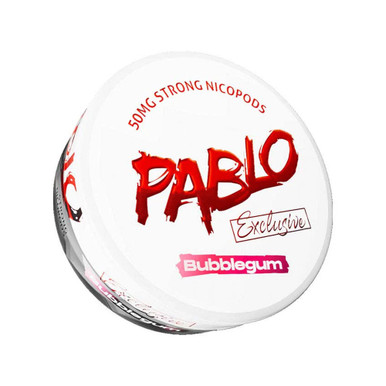
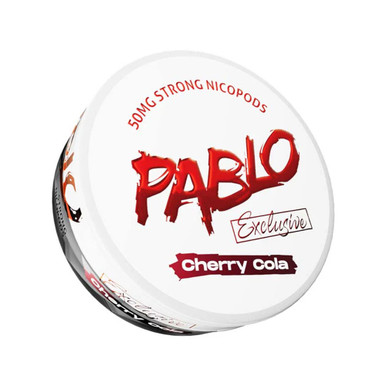
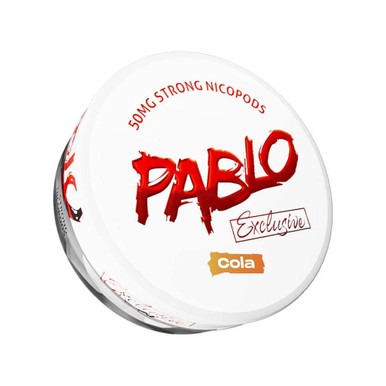
Register change. Pair a fruit with a non-fruit that is not a mint — a soda, a confectionery note, a coffee note. This is the pairing most people arrive at last and the one they tend to stick with, because it changes the whole character of what is in front of them without the jolt of a cooling build. Pablo Exclusive Cola, £3.85 is the obvious soda-named option in this line, and Pablo Exclusive Cherry Cola at the same £3.85 is the same idea with a fruit note folded back into it — a halfway house between register change and adjacency. Pablo Exclusive Bubblegum, £3.85 goes fully confectionery.
Pairing across brands rather than within one
Everything above stays inside one line at one price, which keeps the comparison clean. Pairing across makers introduces a second variable, because build conventions differ between companies, but it opens up a great deal more range.
Cuba Black Apple Juice, listed at £39.90, is an orchard-fruit build from a different maker — the nearest thing in our catalogue to a pear note by family, since apple and pear are close relatives on any fruit map. Maggie Original Jamaican Cherry Tonic Wine at £39.90 is at the opposite extreme of naming, one of the more unusual flavour names we carry, and worth a look purely because it is unlike anything else on the shelf. Siberia Mini, £39.50, is a mint-family can in a smaller format, which changes both the flavour register and the physical one at the same time.
Flag before you click: Iceberg Arasaka, listed at £39.90, is out of stock at present. The page is worth reading if you are surveying what the catalogue contains, but it cannot be ordered today, and we would rather put that here than let you discover it at the basket.
A note on how those neighbours were chosen
The related products shown against this listing are generated from shared shelves, not from a taste judgement made by a person. With no flavour tag on this can, the only shelf it shares with anything is the strength band and the brand. That is why the neighbour list leans so heavily on other cans from the same line — it is the only meaningful overlap the system has to work with. It is a mechanical result, not a curated recommendation, and presenting it as the latter would be dishonest.
Reading the number printed on the label
The declared figure for this can is 50mg, reproduced exactly as the manufacturer prints it. It is label information. It is not anything else.
That distinction earns a paragraph because the figure is the first thing most people look at and the thing most frequently asked to carry more meaning than it has. A declared milligram number is a specification assigned by the company that makes the product and printed on its packaging — the same kind of information as a size on a label or a rating on a plug. It is not a score, not a grade, not a tier, and not a description of the person holding the can.
We print it because it is on the can and because hiding it would make the listing less useful. We do not interpret it, we do not convert it into an expectation, and we do not tell anyone which figure belongs in their hand. That last point deserves the plainest wording available: we cannot advise which strength suits any individual, and we are not going to attempt it. This is a shop with a stock list. We have no knowledge of who is reading, and a retailer is not in a position to make that judgement on anybody's behalf.
There is a corollary about comparing figures between makers. Each manufacturer arrives at its declared numbers in its own way. Two cans from two companies showing similar figures are not equivalent for that reason alone, and a number from one company's range does not translate directly into a number from another's. That is not a caveat invented for this page; anybody who buys across brands will already have observed it.
In our filing, this can sits under Extra Strong, the band holding ninety-eight of our listings. We also keep a Medium Strength shelf and a Strong shelf. Those three names are organisational. They exist so the catalogue can be browsed by declared number, and they are built mechanically from what manufacturers print. They are not a ladder, not a progression and not a claim that any band is preferable. A higher printed figure does not make a can better, and arriving at one is not an accomplishment. It is filing, and it was only ever meant to be filing.
The object itself, and what it does in a pocket
The can deserves its own section because it is the part of the product that gets handled every day, and the part that determines whether something is a nuisance to carry around.
Cans in this category are short cylinders with lids — roughly the diameter of a large coin, not much taller than they are wide, rigid enough to survive a pocket with keys in it. Most of them, including those we handle from this brand, carry a catch compartment moulded into the lid: a shallow recess divided from the main body, meant for used pouches until a bin turns up. It is a small piece of design that removes a genuinely awkward moment, and the trade-off is that a can accumulates its own contents over a few days and wants emptying into household waste. Used pouches go in general waste — not down a sink, not down a drain, not on the ground.
The pouches are small dry sachets. They are placed between lip and gum, most often under the upper lip, and they stay where they are put without being held or adjusted. No device is involved at any point. Nothing needs charging, nothing switches on, nothing is heated, there is no cable and no spare part, and the whole business is silent. The can is the entire kit.
Duration is a matter of personal preference and not something we will put a figure on. Some people remove a pouch long before the flavour is done, others leave it until it is, and both are ordinary practice. Advice about how long, how often or how many is not something a shop should be handing out, and this page does not.
On pouch size: our data holds no format designation and no portion count for this listing. Whether the pouches inside are slim, regular or mini is not recorded, and we will say so rather than guess. The can states it. If you have used other cans from this maker's range, that experience is a better guide than anything we could responsibly write.
Where a pear note lands on the cool, sweet, sharp and bitter axes
Axes are more useful than adjectives, because they place a can relative to other cans rather than promising a sensation. Four of them account for most of what separates one listing from another here. Each reading below shows its reasoning, so you can weigh it rather than take it.
Cool
Low, on the evidence of the name. This can is called Pear and nothing further. Cans built around a cooling element in this category almost always declare it in the name, and this one does not. Against the cooling-led end of the catalogue — anything carrying Ice, Frost or Freeze — this should be expected to sit well down the scale. That is a reading of naming convention, not a guarantee about any individual's experience.
Sweet
Moderate to high, depending entirely on which pear the maker targeted. A green, crisp reading sits mid-scale. A ripe, honeyed reading sits high. A pear-drop confectionery reading sits higher still and is one of the sweeter propositions available in any fruit-named can. Since we hold no maker's description, the honest position is a range rather than a point, and the range is genuinely wide.
Sharp
Low. This is the axis where a pear note most clearly distinguishes itself. Sharpness is the acid impression, the tart signal that makes a mouth react, and pear is a low-acid fruit in a way that citrus and most berries are not. A pear-named can should be expected to read as soft-fronted rather than bright-fronted. If sharpness is what you look for in a can, this name is pointing away from it, and something on the citrus or berry side of the catalogue would be the closer match.
Bitter
Low. Pear carries very little natural bitterness and manufactured pear flavourings rarely introduce any. Of the four axes, this is the one most likely to be close to absent, and it is part of why pear notes read as gentle overall — there is no bitter edge doing the work that peel bitterness does in a citrus build.
What the four readings add up to
A can reading low on cool, low on sharp, low on bitter and mid-to-high on sweet is, in shorthand, a soft one. That is the useful summary, and it is also the most useful warning: somebody who habitually reaches for something bright and cold will find this name pointing at the opposite corner of the map. Whether that is a reason to buy it or a reason not to is entirely a matter of what you are after, and not something a shop should have an opinion about.
Keeping the can in serviceable condition
Dry pouches want dry, reasonably cool storage. The short list of places to avoid: direct sunlight, a car dashboard, a summer windowsill, a shelf above a radiator, a bathroom where the air repeatedly turns damp.
Shutting the lid properly is the single habit that makes the most difference. A can left with the lid a quarter turn loose in a warm room will lose aromatic character over days in a way that a properly closed one will not. This applies to every can in the catalogue, and to a softer, subtler note like a pear it arguably matters more, because there is less loudness in the build to cover the loss.
Some products in the wider category are sold moist rather than dry, and refrigeration is standard practice for those. That does not transfer automatically to a dry can, and we are not going to tell you to put this one in a fridge. The manufacturer's own storage wording on the can is the authority here, ahead of a description page and well ahead of general internet consensus about a different product entirely.
On rotation, the domestic rule applies: open the older can first. If several flavours are in play at once — which, given the section above on pairing, is the likely case — a shallow drawer or tin where every lid is visible in one glance turns rotation into something you can see rather than something you have to keep track of.
Where Pear falls within the brand's range here
Fifty-six listings carry this brand name across our shelves, spread over several named lines, and the Exclusive line is the widest of them. Its flavour names span mints, sodas, berries, confectionery notes, tropical fruits and orchard fruits, which makes it one of the more varied single lines in the catalogue.
Within that spread, Pear is one of the plainest labels. One fruit, no cooling suffix, no compound construction, no confectionery reference. On a shelf that includes three-part fruit names and mint-fruit hybrids, this is among the simplest propositions to read from the label, and — because we hold no tag and no maker's note — also one of the least documented.
Its nearest structural relative in the line is the banana-named can at £3.85, which is a single soft fruit with a cooling suffix added: the same basic shape with one extra element attached. The most distant is probably Pablo Exclusive Blue Raspberry, £3.85, which names a confectionery version of a fruit rather than the fruit itself.
Every can in this line on our shelves is £3.85. There is no pricing signal distinguishing the flavours from one another, which means the choice between them is purely a flavour choice, with nothing else pulling at it.
What to keep in the drawer beside it
The pairing principles above are the general case; this is the specific shortlist, with a reason attached to each rather than a bare list of names.
For the widest swing at the same price, the frosted can in this line is the cooling-led opposite of a soft fruit and is currently available. For a fruit-to-fruit rotation that changes weight rather than category, the dark cherry can, £3.85 is the straightforward pick. For a change of register without a cooling jolt, the cola-named can in this line is the one people reach for, with its cherry-cola counterpart offering the same move with fruit folded back in.
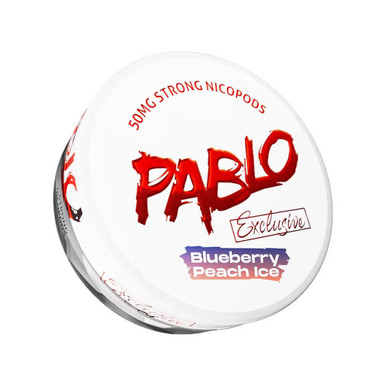
For a compound fruit rather than a single one, the blueberry, cranberry and cherry can at £3.85 stacks three dark notes where this can names one light one. And Pablo Exclusive Blueberry Peach Ice, £3.85 introduces the cooling element this can's name lacks, which is the single most useful variable to change if you want to test whether cooling is what you actually prefer.
Choosing, when the listing offers one thing
This page presents an unusually simple decision, because there is not one to make. One declared figure of 50mg, one variant, one price of £3.85. No cans-per-pack value is held against this product, so if a multi-can quantity is what you want, that is resolved at the basket rather than on this listing.
The real choice is which shelf to browse rather than which button to press. If the figure printed on this can is higher than the figures you normally buy, the obvious step is to look at the medium band or the strong band and read those listings on their own merits. We will not tell you which band you belong in. We will note that the bands exist and that browsing by declared number is a perfectly normal way to use this catalogue.
If flavour is your axis rather than figure, this particular listing is an awkward starting point, for the reason given at the top: it has no flavour tag and therefore no flavour shelf. The complete catalogue is the fallback, and browsing the whole of this brand's range is the practical alternative.
Ordering, delivery and proof of age
This is an age-restricted product and the process reflects it. Sales are to adults aged 18 or over who already use nicotine. Age verification forms part of placing an order, and identification may be requested on delivery. A courier is entitled to withhold a parcel where age cannot be established, and that is not a discretionary decision on their part.
On stock: this can shows as available as this is written. Availability across the catalogue shifts, which is why the unavailable neighbour above is flagged rather than left to be discovered later. The live position on the listing page itself always overrides anything written in advance, including everything here.
On price: £3.85 is the figure held against this listing. Prices elsewhere in the shop differ, sometimes by a factor of ten, and the difference is frequently not like for like — different listings cover different quantities, and where a cans-per-pack figure exists it appears on that product's page. None is held here, so we are not going to describe this price as cheap or dear relative to anything else. Each listing's price should be read against its own stated contents.
Where an order goes wrong — damage in transit, a missing line, the wrong item — that is handled through our ordering and returns process, which is documented on the pages that exist for it rather than inside a product description.
Navigating out from this page
This listing sits on two shelves rather than the usual three. By declared figure it is filed with the ninety-eight cans in the Extra Strong band, and by maker it belongs to the fifty-six listings under this brand. There is no third, flavour-based route in, because no flavour tag is recorded against it.
That is a real limitation in how the catalogue surfaces this product, and it is worth stating rather than glossing. Somebody browsing by flavour family will not encounter this can at all. They will find it through the brand, through the strength band, or by typing the name.
For anyone who has settled on a maker whose builds agree with them, brand shelves are the most useful entry point, and they are organised identically across the site. The Cuba shelf is another large one and works the same way. If none of the structured routes suits you, everything we stock is a single page you can scroll.
Questions people put to us about this one
Why is there no flavour listed on this product?
Because our catalogue holds no flavour classification against it. The field is empty. That is a gap in our data rather than a statement about the can, which is named Pear by its manufacturer. The practical effect is that the product does not appear on any flavour shelf and cannot be found by browsing flavour families. We have chosen to report the gap rather than invent a tag to fill it.
Does it taste like a fresh pear or a pear drop?
We cannot tell you, because we hold no manufacturer tasting note. Those two readings are genuinely different — one is soft, green and mild, the other is sweet, aromatic and unmistakably a sweet-shop flavour. The section above sets out the difference so that you can recognise which you have met. Writing a note in the maker's voice when they have not given us one would be fabrication, and we would rather leave the question open than answer it falsely.
How many pouches are in the can?
Our data does not carry a portion count for this listing, so there is no honest figure for us to publish. The can itself declares it and that declaration is reliable. If portion count is what decides the purchase, check the can or ask before ordering rather than relying on a number typed onto a description page by somebody reading a catalogue export.
Is there a cooling element in it?
Nothing in the name indicates one, and we hold no information suggesting one is present. Cooling-led cans in this category almost invariably signal it in the name with a word such as Ice or Freeze, and this one is called Pear and nothing else. That is an inference from naming convention rather than a claim about contents, and it is as far as honesty allows us to go.
Is 50mg the only option?
On our shelves, yes. This listing holds one declared figure and one variant at £3.85. Whether the manufacturer makes this flavour at other figures is beyond what our catalogue can tell you — the absence of a second variant here means we do not list one, which is a narrower statement than saying none exists anywhere.
How long is a pouch normally kept in?
We are not going to answer that with a number, and the reason is not evasion. Duration is individual, it varies widely between people, and guidance on how anybody uses a nicotine product is not something a retailer should be issuing. What is fair to say is that dry pouches are generally quieter in the opening stretch than in the middle, which catches out people arriving from other formats.
Where is this product made?
We do not hold that information and will not speculate. Country of origin, manufacturing arrangements and supply chain are not part of the data behind this listing. Anything printed on the can is the manufacturer speaking for themselves, and that is the source to trust.
Can I use this in the office or on a train?
Not something we can answer. Employer policies, venue conditions and transport operators' rules are set by those organisations and are theirs to state and enforce. They vary widely, and a policy that does not mention pouches is not the same as a policy that permits them. Ask whoever runs the premises or the service. Nothing written on a shop's product page carries any weight against a rule set by somebody else.
Which strength should I go for?
We cannot advise on that for anybody, in any situation. It is not a judgement a retailer is placed to make, and we will not make it indirectly by implying that one band is a starting point and another is somewhere to arrive. The strength shelves here are filing built from the numbers manufacturers print — not a ranking, not a route.
How should I store it once opened?
Lid closed, cool, dry, out of the sun. Keep it away from the predictable hot spots — parked cars, sunny sills, radiator shelves. A properly shut lid is worth the small effort on any can and arguably more on a subtler one, since there is less in the build to mask what drifts off. If the manufacturer prints more specific storage wording on the can, that wording takes precedence over this paragraph.
Why do the related products all come from the same brand?
Because with no flavour tag recorded, the only shelves this can shares with anything are the brand and the strength band. Related products are generated from shared shelves, so the list collapses onto other cans from the same maker. It is a mechanical consequence of a missing field rather than a recommendation that you should stay within one brand.
The notice this product must carry
This is a nicotine product. The following applies without exception.
- Sold only to adults aged 18 or over, and only to people who already use nicotine.
- Nicotine is an addictive substance.
- It is not a licensed stop-smoking medicine and is not offered, described or intended as one anywhere on this site.
- It is not intended for non-smokers, for anyone who does not already use nicotine, for anyone under 18, or for anyone who is pregnant or breastfeeding.
- Keep out of reach of children and animals.
- Age verification applies to every order, and ID may be requested on delivery.
No health claim of any kind is made about this product on this page, in either direction, and nothing above should be read as one. Anything touching your own health belongs with a qualified professional rather than with a retailer.
To close
Pablo Exclusive Pear is a single-strength can at £3.85 with a declared figure of 50mg, in stock as this is written, with one photograph, one flavour word and — unusually — no flavour classification in our data at all. Every paragraph above has either been built from that short list or has said openly where the list runs out. If the wider range is what you came for, the full brand shelf is the sensible next stop.
More from Pablo
More extra strong pouches
More pablo pouches
Where this sits
Pablo Exclusive Pear Nicotine Pouches appears in these categories. Browse them, or jump to something close.
You might also like