Home / Extra Strong / Pablo Exclusive Mocca Nicotine Pouches
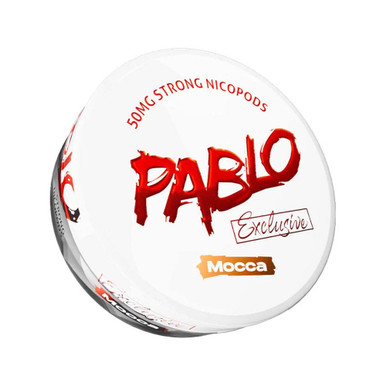
Pablo · 50mg
Read the full guide
Pablo Exclusive Mocca Nicotine Pouches
£3.85
✔ In stock — ready to ship
100% tobacco-free
Free over £20
Same-day dispatch
Secure checkout
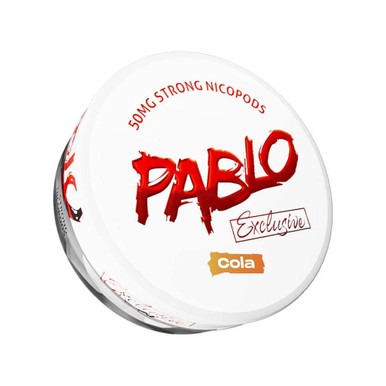
This page belongs to Pablo Exclusive Mocca Nicotine Pouches, listed at £3.85. Our product record holds one declared strength, 50mg, one product image, and a stock status of in stock as this page was written. It also holds something we should deal with immediately, because it changes what this page can honestly claim: the flavour field on this listing is empty. There is no flavour tag against this can at all — not coffee, not mint, not anything.
That matters in two practical ways. The first is that the only signal we hold about what this can tastes of is the word on the lid. The second is structural: because our flavour shelves are built from that field, a can with no tag does not appear on any of them. Browse this site by flavour and you will not find this listing. It is reachable only through the strength band it sits in and the brand page, and that is a gap in our filing rather than a statement about the product. We have chosen to say so here rather than write a confident flavour page over the top of an empty field.
The full guide to Pablo Exclusive Mocca Nicotine Pouches
4,827 words on how it eats, who it suits, how to serve it and what to put beside it.
Pablo Exclusive Mocca: the listing, and a gap in it
Everything below is one of three things: a description of the object, a comparison with other cans on our own shelves, or a plain note that we do not hold something. We do not publish ingredient, composition or technical information for nicotine products. We do not describe anything that happens after a pouch is in place. We make no statement in any direction about anybody's wellbeing, and we carry no ratings or testimonials, so nothing here is offered as a popular verdict.
The can is a shallow round tin with a friction-fit lid. Lift it and the pouches sit in a ring in the base — small, soft-edged, dry to the touch, white. Turn the lid over and there is a shallow well in the underside, which is where used pouches go. Nothing needs charging and nothing needs assembling. A pouch goes under the upper lip, sits there quietly, and comes out by hand.
This is an adult nicotine product, listed and sold on the basis that the buyer is 18 or over and already uses nicotine. The complete wording sits in its own section towards the foot of the page, and nothing above it is addressed to anyone else.
What the name points at, and how far we can follow it
Mocca — or mocha, depending on whose spelling you use — names a specific idea: coffee with chocolate in it. Not coffee with a chocolate biscuit beside it, and not a chocolate flavour with a coffee note; the point of the word is that the two are combined into something that reads as one flavour rather than two. Coffee brings roast, bitterness and a dark aromatic depth. Chocolate brings sweetness, a rounder body and a cocoa dryness at the end. Together they make a flavour that is heavy, low, dark and sweet all at once.
That is what the word means. What we cannot do is confirm from our own data that the can delivers it, because, as set out above, our flavour field for this listing is empty. We hold no description from the maker and no tag of our own. The name on the lid is the strongest evidence available and it is the only evidence we have.
Taking the name at face value, a coffee-and-chocolate pouch flavour typically opens with the roast note, since that is the most volatile and immediate part of the idea, and then fills in with the sweeter cocoa body underneath. The bitterness sits low and arrives late rather than at the front. There is no fruit acid in a flavour of this kind and usually no cooling element — and in this case the record cannot tell us whether a cooling element is present or absent, because it holds nothing either way, and the name carries no cooling word.
We would rather leave that as an open question than close it with a guess. If knowing whether the can has a cool note is the deciding factor for you, the packaging will tell you and we will not. Ask us before ordering if it matters and we will look at a tin rather than write a sentence.
Placing it on four axes: cool, sweet, sharp, bitter
Flavour names are a poor way to compare cans, because two listings with the same word on the lid can taste very little alike. A more useful exercise is to place a can on four separate axes, since they move independently. What follows is that exercise for this listing, with the caveat that we are reasoning from the name rather than from a flavour tag, and we will mark the places where the reasoning runs out.
Bitter
This is the axis the whole flavour is built on, and it is the reason a coffee-type can behaves differently from almost everything else on our shelves. Bitterness is a slow flavour. It registers later than sweetness and later still than sharpness, and it lingers after the others have gone. A can built around it therefore feels back-loaded compared to a fruit can: less happens in the first thirty seconds and more happens in the last stretch. People coming to a flavour like this from a bright fruit can often describe the opening as quiet, and that is the architecture rather than a weakness.
Sweet
Present and meaningful, because the chocolate half of the idea is what stops a coffee flavour being austere. Where exactly this can sits between a dark, barely sweetened reading and a milky, confectionery one is not something our record can tell us. Across the catalogue generally, coffee-and-chocolate flavours tend to land nearer the sweeter end, because the dry, bitter version is a harder sell and harder to build. Treat that as a general observation about the flavour family rather than a claim about this tin.
Sharp
Absent, or as near to absent as the catalogue gets. There is no citrus, no berry acid, nothing to make the flavour feel bright or immediate. That is the single clearest difference between this can and the bulk of the Pablo range, which is dominated by fruit. If sharpness is what you want, Pablo Exclusive Dark Cherry at £3.85 is the same maker at the same price with that axis pushed right up, and the Cherry Cola can, also £3.85, sits partway between the two ideas with a dark sweet base and a fruit note over it.
Cool
Unknown, and we are going to leave it unknown. The name carries no cooling word and our flavour field is empty, so we have nothing to reason from in either direction. For a can from the same maker where the cooling element is declared in the name and is unmistakably the point, Pablo Exclusive Frosted Ice at £3.85 is the obvious reference, and reading the two listings together is the quickest way to see what this one does not tell you.
A fifth thing the four axes miss
Four axes are a useful frame and they leave one thing out, which is weight — how heavy or light a flavour feels irrespective of how sweet, sharp, bitter or cool it is. Weight is the reason a berry can and a coffee can described with identical scores on the other four would still be nothing like each other. A light flavour sits at the front of the mouth and is easy to have alongside other things. A heavy one fills more space and is harder to ignore, which is why heavy flavours are the ones people most often pair with something plain.
On the evidence of the name, this is a heavy can. Coffee and chocolate are both weighty ideas and the combination of them is heavier than either alone. That is the characteristic most likely to determine whether you keep buying it, more than the exact balance of bitterness and sweetness, and it is also the reason the rotation section below spends more time on palate resets than the equivalent section would on a fruit listing. As with everything else on this page, that is reasoning from the word on the lid rather than from a field in our record, and we would rather show the reasoning than hide it behind a confident sentence.
Reading the four together
Low sharpness, real bitterness, meaningful sweetness, and an open question on cooling. That combination puts this can a long way from the middle of our catalogue, which is overwhelmingly fruit and mint. It is a specialist flavour, and like most specialist flavours it tends to be bought deliberately rather than stumbled into. That is a description of where it sits, not a verdict on it.
Building a coffee flavour into a dry pouch
A pouch has to deliver something recognisable from a small dry object with no liquid and no device involved, and coffee is one of the harder briefs in that format. Understanding why is the most useful thing we can offer about why this can behaves as it does. What follows concerns the perceptible result only. We do not publish composition and we are not going to speculate about it.
Which flavour families travel well
Mint is the easiest thing to put into this format, because mint is already a cooling-and-aroma flavour and almost nothing is lost. Citrus is next, since the defining feature of citrus is a sharp top note and top notes carry easily. Berry and other light fruits come through well enough. Heavy fruits are harder, because they are defined partly by texture and a dry pouch has no way to supply texture, so they tend to be rebuilt out of aroma and read as a confectionery version of themselves.
Coffee and chocolate are the hardest of the common ideas, and for a specific reason: the parts people recognise are bitterness, roast and body, and none of those is a top note. Bitterness is slow. Roast is an aroma that we mostly associate with heat. Body is close to texture. A coffee pouch therefore has to suggest all three using the one channel available, which is why coffee flavours in this format are consistently described as reading like the idea of coffee rather than like a cup of it.
The three phases, and why this family front-loads badly
Most pouch flavours move through three phases: an opening of roughly the first half-minute, a long body, and a tail where the flavour thins to a background note. Fruit and mint cans are usually strongest in the opening, which is why they feel immediate. A coffee-type can is built the other way round almost by necessity, because its defining components register slowly. The opening is the quietest part, the body is where the flavour actually lives, and the tail keeps the bitterness longest.
The practical consequence is that a flavour of this kind is judged unfairly in the first minute and more fairly in the tenth. Anyone comparing it side by side against a bright fruit can in a short window will conclude the fruit can is more flavourful, and over a full pouch that conclusion often reverses. We mention that because it is the single most common misreading of this flavour family, not because we are arguing anyone into anything.
What the dark-sweet corner of the catalogue looks like
Very little on our shelves is built this way, which makes the comparisons short. Pablo Exclusive Cola at £3.85 is the nearest thing within the same range — a dark, sweet, spiced idea rather than a bright one, with a similar low centre of gravity even though it tastes nothing like coffee. Maggie Original Jamaican Cherry Tonic Wine at £39.90 is the most unusual flavour description on this part of the site and belongs in the same broad territory: dark, bittersweet, and nothing like a fruit can. Beyond those two the catalogue moves quickly back toward fruit and mint.
What we are not telling you here
Nothing in this section describes what is in a pouch, how a flavour is made, or what happens after one is in place. Those are all things we either do not know or do not publish. This is a description of how flavours in this family are perceived over the life of a pouch, offered because it is more useful than an adjective, and it should be read as a general account rather than a specification for this particular tin.
The format, in practice
A pouch from this tin is a small soft rectangle with rounded corners, dry to the touch, light enough to disappear in a closed hand. It goes under the upper lip and stays where it is put. A fresh one feels slightly bulkier than it looked in the tin; that impression settles within a minute or two as it takes the shape of the space. After that most people stop noticing it. Conversation and drinking carry on normally with one in. Some people eat with one in and some do not, which is preference rather than practice.
How long anyone keeps one in varies too widely for a single figure to be honest — ten minutes at one end, most of an hour at the other, with the same person differing across a day. Because the flavour thins gradually rather than stopping, most people go by taste rather than by a clock. We publish no recommended duration and will not: we do not have one, and the manufacturer's labelling is where any such guidance properly belongs.
Our record carries no portion count for this listing, so we cannot tell you how many pouches a tin holds. The figure is printed on the packaging, as are the weight of a pouch and the size of the can. Removal is a matter of hooking the pouch with a fingertip; it goes into the well under the lid, which holds several before needing to be emptied, and from there into general waste. Not a sink, not a plant pot, not a car window. Used pouches are small and pale and easy to leave on a surface, which is the plain reason a household with children or pets keeps the tin shut and out of reach.
On the tin itself: the lid is a friction fit, so it comes off with a thumb under the rim and goes back with a firm press. Seated properly it does not shift on its own; a lid balanced on the base rather than pushed home is the usual explanation for loose pouches in a bag. The top face carries the maker's name, the flavour word and the declared figure, which is what makes a stack of tins in a drawer readable from above without picking each one up.
50mg: what the number is, and what it is not
The declared figure on this can is 50mg, and it is the only strength this listing comes in. We publish it because it is printed on the can and because it is the field people sort the catalogue by.
It is the manufacturer's declaration, not a measurement of ours. Our record stores the text 50mg and holds nothing about the basis on which it is declared; rather than assume a convention and print the assumption as fact on a nicotine product's page, we point at the labelling on the can, which is the authority. That is a smaller answer than the question deserves and it is the accurate one.
The site sorts listings into bands so that a catalogue this size can be filtered. This one falls on the extra strong shelf of 98 listings, and we also run a medium band and a strong band. Those are filing drawers and nothing more. They are not a ladder, not a progression, and not a sequence anybody is meant to move along. A bigger figure on a lid is not an achievement, not a mark of quality, and not something this site frames as a target.
We cannot advise which strength suits anyone. We hold no information about any individual customer, we are not qualified to give that advice, and we will not give it by implication either — not by describing one band in warmer language than another and not by treating any figure as a default. Our job is to publish every declared figure we hold in the same format on every listing, so that a comparison between two cans is a comparison of like with like.
This can's position on the Pablo shelf
The Pablo brand page holds 56 listings, which makes it one of the larger single-maker shelves we run, and the Exclusive line accounts for most of it. The line is consistent in a genuinely useful way: one declared strength per listing, a flat price of £3.85, the same tin throughout, and the flavour as the only moving part.
Within that line this can is an outlier. The range is mostly fruit, with a cold group and a confectionery group alongside it, and a coffee-and-chocolate entry sits on its own. There is no second coffee can on that shelf to compare it against, and the nearest neighbours by character are the dark, sweet, non-fruit listings rather than anything else. That is worth knowing before you browse the brand page looking for something similar, because you will not find it there.
If you want to see how a different maker lays out a range of comparable size, the Cuba brand shelf is the closest equivalent we run. If you would rather not filter at all, the full catalogue sits in one index.
What people keep alongside it
Two or three cans in rotation is the ordinary pattern, and the reasoning is plain: a flavour you have a great deal of becomes less distinct the more of it you have. With a flavour as singular as this one, the second can matters more than usual, because there is nothing else on the shelf that does the same job when this one runs out.
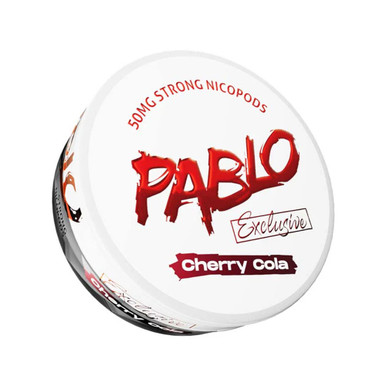
Staying dark: the Cola can at £3.85 is the nearest thing in the range by architecture — low, sweet, not fruit-led — and Cherry Cola at the same price adds a fruit note over that dark base, which makes it a halfway position rather than a contrast.
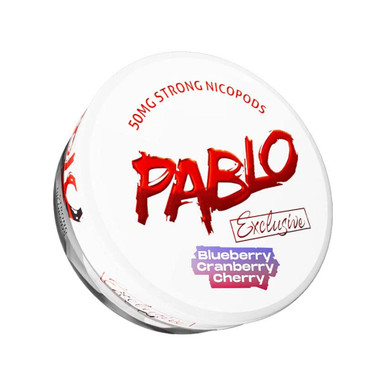
Going bright for contrast: the Dark Cherry can at £3.85 is a proper fruit flavour with real sharpness in it, and Pablo Exclusive Blue Raspberry, same price, is brighter still. The Blueberry Cranberry Cherry listing stacks three fruits at £3.85 and is about as far from a coffee idea as the range travels.
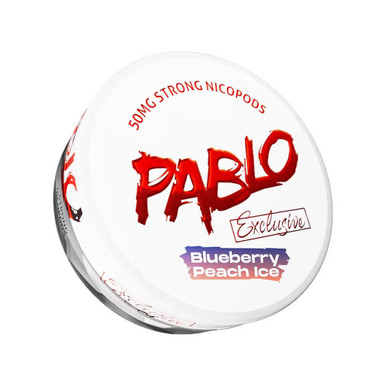
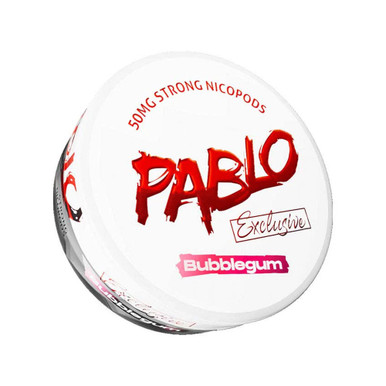
Going cold: Frosted Ice at £3.85 and the Blue Mint can, also £3.85, are the two obvious palate resets within the range, and a plain cold can is what a large number of people keep beside anything heavy. Blueberry Peach Ice is fruit with a cold layer over it if you want both at once, and Pablo Exclusive Banana Ice is a soft heavy fruit treated the same way. Pablo Exclusive Bubblegum is the range's straightforward confectionery entry. Every Pablo listing named here sits at £3.85 and is marked in stock as this was written.
Outside the range: Cuba Black Apple Juice at £39.90 is a rounded orchard-fruit flavour and a clean contrast, and Siberia Mini at £39.50 changes the format rather than the flavour family, since it is listed as a mini. One more belongs in this list with a caveat: Iceberg Arasaka at £39.90 is currently out of stock, so its page is there to read rather than to buy from today.
Keeping the can in reasonable condition
Three things shorten the life of a tin and all three are avoidable. Heat comes first: a dashboard in summer, or a car standing in the sun, is worse than anywhere indoors. Humidity is second, which is why a bathroom shelf is a poorer choice than it looks. A lid that has not been pressed home is third, and it is the one that actually costs people a tin.
Some people keep an opened can refrigerated on the theory that the flavour holds longer. We have not tested that and will neither endorse nor dismiss it. The manufacturer prints storage guidance on the packaging, and that guidance outranks anything written on a shop's web page, this one included.
Otherwise: keep the tin closed when it is not in use, keep it out of reach of children and pets, do not decant the contents into an unlabelled container, and put used pouches in general waste rather than leaving them on a worktop or a console.
What there is to choose between here
Almost nothing, and it is more useful to say so than to invent a decision. There is one declared strength, 50mg. There is one price, £3.85. Our record shows no can count and no multipack variant, so there is no pack-size option on this listing at all.
The real choice is between this can and a different one. The strength shelves will sort the catalogue by declared figure; the brand pages hold the tin and the price constant while the flavour moves. What will not help you here is the flavour navigation, because — as set out at the top — this listing carries no flavour tag and therefore appears on no flavour shelf. We will not tell you which figure or which band to prefer, and the reason is in the strength section above.
Ordering, delivery and the age check
The listing is marked in stock as this page was written, and the listing page itself is the live position rather than this sentence. Checkout is ordinary, and the price shown on the listing is what you pay.
Age verification is not a formality. We sell only to adults aged 18 or over, an age check runs at checkout, and ID may be requested on delivery. Where it is requested and no adult at the address can produce it, the parcel will not be handed over, which is worth considering before sending an order to a workplace reception or a neighbour.
Our standard returns policy applies, with the unavoidable limit that an opened can of a consumable cannot be resold. There is no way to test a flavour without opening the tin. With a flavour as distinctive as this one, and with no flavour tag in our record to help you predict it, the sensible course is to treat a first can as a small experiment rather than a stock-up. At £3.85 it is a cheaper experiment than most of what sits on our shelves.
Where this page sits on the site, and where it does not
Two routes lead here and it is worth being precise about that, because most listings have three or four. The extra strong band, holding 98 listings, is the broadest. Pablo's own page, with 56 listings, is the route to take if you browse by maker. Those are the only two shelves this can appears on.
It appears on no flavour shelf, because our flavour field for it is empty. If you are browsing by taste — coffee, dark, sweet, anything — you will not come across this listing, and that is a limitation of our filing rather than anything to do with the product. We would rather print that plainly than let somebody conclude the can does not exist. The full index of everything we stock lists it along with everything else, and it is the reliable route if the flavour shelves are how you usually navigate.
Questions we get about this can
Why does this listing have no flavour tag?
We do not know. The field is genuinely empty in our record rather than hidden, and we have not filled it in to make the page tidier. The practical effect is that the can appears on no flavour shelf, which is why we flagged it in the first paragraph rather than at the bottom. If we establish the right tag we will add it, and the listing will start appearing on the relevant shelf.
So what does it taste of?
The name points at coffee with chocolate, and that is the only signal we hold. We have described what that flavour idea means and how flavours in that family tend to behave in this format, and we have marked the places where we are reasoning from the name rather than from data. We are not going to write a confident tasting note over an empty field.
Is there a cooling element in it?
We cannot tell you. The name contains no cooling word and our flavour field holds nothing either way. If that is the deciding factor for you, the packaging states what the can is, and you are welcome to ask us before ordering so that we can look at a tin rather than guess.
How many pouches are in the can?
We do not hold that figure. Our record carries no portion count for this listing and we will not estimate one. The number is printed on the packaging, which is the authority for it.
Does 50mg mean per pouch?
Our record stores the declared strength as the text 50mg and does not record the basis on which it is declared. We are not going to guess at that on a nicotine product's page. The labelling on the can states it.
Which strength should I choose?
We cannot answer that. We hold no information about any individual customer, we are not qualified to advise, and a shop steering that choice on a product page would be overstepping. We publish every declared figure we hold in a consistent format so that listings can be compared against each other; the decision itself is not ours.
What is in the pouches?
We do not publish ingredient, composition or technical information for this or any nicotine product on the site. The manufacturer's labelling on the can carries that and is the authoritative source for it.
Is there another coffee flavour on your shelves?
Not one we can point you at from this listing's own data, and we will not send you to a page we have not verified holds what you are after. The nearest things by character rather than by taste are the dark, sweet, non-fruit listings named in the comparison sections above. If a coffee flavour specifically is what you want, it is worth asking us directly.
Is there a multipack of this?
Not on this listing. Our record shows a single configuration at £3.85 with no can count and no multipack variant. If that changes, the listing page will show it before this paragraph does.
Why is this £3.85 when other listings are £39.90?
Because the two numbers are not describing the same quantity, and our record does not store what quantity each price covers. Treating them as directly comparable would be misleading, so we have avoided doing it anywhere on this page. Read each listing for what it says it includes.
Can I take a can abroad?
National rules on bringing nicotine products across borders vary widely and some countries restrict or prohibit them outright. We hold no list of those rules and will not guess at one. Check the destination's published requirements, and the carrier's, before travelling.
Do you publish scores or customer opinions?
No. There is no scoring system on this site and we do not write testimonials, so nothing above is presented as anybody else's verdict. Everything on this page is either a field from our own record, a description written by people who stock the can, or a comparison with other listings we hold.
The notices we are required to carry
Nicotine is an addictive substance.
Pablo Exclusive Mocca Nicotine Pouches are sold only to adults aged 18 or over who already use nicotine. An age check runs at checkout, we do not sell to anyone under 18, and ID may be requested on delivery; where it is requested and no adult at the address can produce it, the parcel will not be handed over.
This product is not a licensed stop-smoking medicine and holds no authorisation of that kind. It is not intended for non-smokers, for anyone who does not already use nicotine, for anyone under 18, or for anyone who is pregnant or breastfeeding. Nothing on this page is medical advice, and nothing on it should be read as a suggestion that anybody begin using nicotine or select any particular strength.
Keep the can closed and out of reach of children and pets, and dispose of used pouches in general waste. Every product fact above — brand, name, price, declared strength and stock status — comes from our own record for this listing, and where that record holds nothing, including the flavour field, we have said so rather than estimating. The manufacturer's labelling on the can is the authority for anything printed on the packaging.
The short version
Pablo Exclusive Mocca is listed at £3.85 in a single declared strength of 50mg and marked in stock as this was written. Its name points at coffee with chocolate — dark, sweet, genuinely bitter, with no sharpness in it — but our flavour field for this listing is empty, so the name is the only evidence we hold and we have not written past it. It appears on just two shelves, the 98-listing extra strong band and the Pablo page, and on no flavour shelf at all. The nearest things to it in the range by character are the Cola can and Cherry Cola, both £3.85, and the usual companion for something this heavy is a plain cold can such as Frosted Ice. Everything we know about this product is on this page, and everything we do not know, we have said we do not know.
More from Pablo
More extra strong pouches
More pablo pouches
Where this sits
Pablo Exclusive Mocca Nicotine Pouches appears in these categories. Browse them, or jump to something close.
You might also like